
The Silent Killer of Antique Textiles
Among all the forms of deterioration that threaten antique and luxury area rugs, dry rot is perhaps the most insidious. Unlike moth damage or physical tears that show immediate outward signs, dry rot works silently from the inside out. By the time a homeowner notices that the pile is shedding or the foundation is giving way, the structural integrity of the textile may already be severely compromised. At Shabahang Rugs, we understand the heartbreak of discovering damage in a treasured heirloom, and we believe that understanding the root causes of dry rot is the first step toward effective preservation.
What Is Dry Rot and Why Does It Happen?
Despite its name, “dry rot” is actually caused by moisture, not a lack of it. When natural foundation fibers—such as cotton, wool, or linen warps and wefts—are exposed to prolonged moisture and trapped humidity, microscopic fungi and bacteria begin to break down the cellulose or protein bonds within the yarn. As the moisture eventually evaporates, the fibers are left brittle, powdery, and completely devoid of tensile strength. The thread literally turns to dust under minimal pressure, leaving the knots with nothing to anchor to.
Primary Triggers of Dry Rot in Rugs
Dry rot rarely happens overnight. It is typically the cumulative result of specific environmental conditions and maintenance errors.
| Trigger Source | How It Occurs | Impact on the Rug |
| Chronic Humidity & Dampness | Placing rugs on unsealed concrete basement floors or in humid rooms | Traps moisture in the foundation, feeding fungal growth |
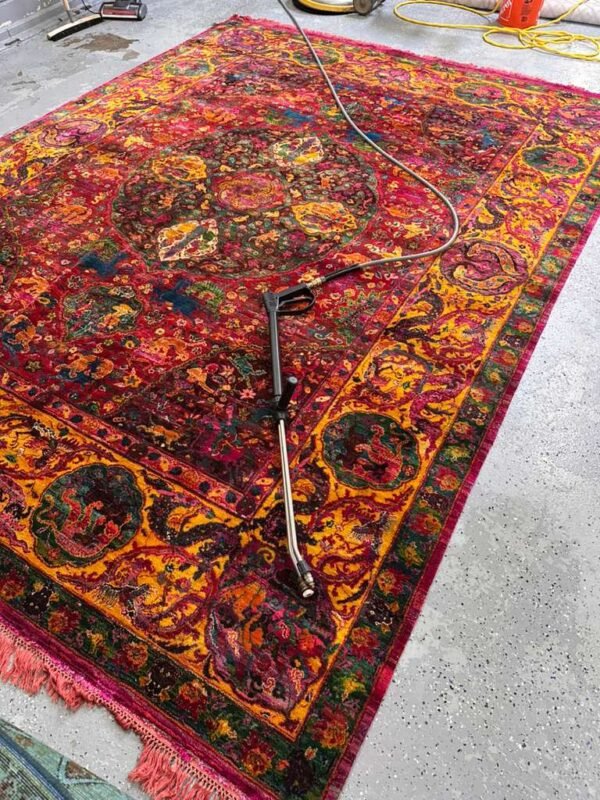
| Improper Home Cleaning | Using rental machines that leave gallons of water trapped in the core | Prevents proper drying, causing inner fibers to rot within days |
| Non-Breathable Backings | Using cheap plastic or non-porous rubber pads that block airflow | Traps ambient condensation and minor spills against the floor |
Warning Signs That Your Rug Is Suffering from Dry Rot
Catching dry rot early can save a textile from total structural collapse. Watch for these subtle indicators during your routine maintenance:
- A Persistent Musty Odor: A damp, earthy smell that lingers even after vacuuming or professional cleaning usually signals active fungal activity in the foundation.
- A Stiff or Brittle Backing: If the backside of the rug feels rigid, crunchy, or powdery to the touch rather than flexible and supple, the fibers are degrading.
- Sinking or Collapsing Pile: Areas where the rug feels unusually soft or squishy underfoot indicate that the foundation threads beneath have already snapped.
- Fringe Separation: Fringes that pull away effortlessly from the rug edge often point to rotted weft and warp foundations at the ends.
Effective Prevention Strategies for Homeowners
Protecting your antique and luxury rugs from dry rot requires a proactive approach to your indoor environment and cleaning habits:
- Control Indoor Humidity: Keep your home’s relative humidity below 50 percent using air conditioners or dehumidifiers, especially in finished basements or ground-floor rooms.
- Avoid Basement Floor Placement: Never lay valuable antique rugs directly on concrete or stone slabs, which naturally sweat and transmit ground moisture upward into the textile.
- Use Breathable Rug Pads: Always pair your rugs with premium, open-weave, natural rubber and felt pads that permit continuous airflow beneath the textile.
- Entrust Washing to Professionals: Skip DIY rental machines and household saturation methods. Ensure your rugs undergo rapid, professional extraction and climate-controlled drying.
Can Dry Rot Be Restored?
Once dry rot severely damages the foundation of an antique rug, standard cleaning or spot mending cannot reverse the chemical breakdown. However, master restorers can salvage valuable pieces through intensive conservation techniques. This process involves carefully cutting away the rotted sections, rebuilding the foundational warp and weft threads by hand, and re-weaving the missing knots to restore structural stability and aesthetic harmony.
Frequently Asked Questions
1. Does dry rot spread to other rugs in the same room?
Dry rot fungi and mold spores can spread through the air if environmental conditions remain humid, potentially affecting other nearby textiles or organic materials.
2. Can a rug with dry rot still be vacuumed?
Vacuuming a dry-rotted rug can cause further damage, as the suction and mechanical agitation will pull apart brittle foundation threads and accelerate fiber shedding.
3. Why do antique rugs suffer from dry rot more than modern rugs?
Antique rugs often feature organic cotton or wool foundations that are centuries old and naturally more sensitive to environmental shifts, humidity, and past chemical exposures.
4. Is professional restoration worth the cost for a dry-rotted rug?
For high-value antiques, museum pieces, or family heirlooms with deep sentimental significance, professional foundation re-weaving is often well worth the investment to preserve its history.
5. How can I test my rug for dry rot at home?
Gently fold a small section of the rug back. If you hear a faint crackling sound or notice powdery white dust along the crease, the foundation may be experiencing dry rot.
Contact Shabahang Rugs today for expert structural assessments, professional conservation, and specialized maintenance advice to protect your heirloom collection from hidden damage.