
Navigating the world of fine handmade textiles can often feel overwhelming due to overlapping terminology and regional classifications. Homeowners and interior design enthusiasts frequently wonder whether a Persian rug and an Oriental rug represent two entirely different floor coverings or if the terms are interchangeable. While all Persian rugs fall under the broader classification of Oriental rugs, not all Oriental rugs can be defined as Persian.
Understanding the subtle distinctions between these two categories involves exploring geographic origin, knot construction techniques, design symbolism, and historical craftsmanship. At Shabahang Rugs, we specialize in helping collectors and homeowners evaluate fine floor coverings to ensure they select an authentic piece that aligns with their aesthetic vision and lifestyle needs.
Clarifying the Fundamental Definition: Squares and Rectangles
To grasp the difference between these two classifications, it helps to use a classic mathematical analogy: all squares are rectangles, but not all rectangles are squares. In the rug industry, “Oriental rug” serves as an overarching umbrella term, while “Persian rug” represents a specific, highly celebrated origin within that umbrella.
An Oriental rug is broadly defined as a hand-woven or hand-knotted textile produced in traditional rug-weaving regions across Asia and parts of the Middle East. This vast geographical expanse stretches from Turkey in the west to China in the east, encompassing countries such as India, Pakistan, Afghanistan, Nepal, and Tibet.
Conversely, a Persian rug strictly originates from the historical borders of Persia, modern-day Iran. Because of Iran’s unique weaving heritage, distinct knotting methods, and centuries-old artistic traditions, Persian rugs hold a prestigious standing within the broader Oriental rug category.
Geographic Breakdown of Oriental Rug Regions
Because Oriental rugs originate from diverse countries across Asia and North Africa, each region contributes distinct weaving materials, color combinations, and cultural motifs.
Key Oriental Weaving Hubs Outside Iran
- Turkish Rugs (Anatolia): Renowned for their symmetrical double-knot construction (Ghiordes knot), Turkish floor coverings feature bold geometric motifs, tribal designs, and rich natural dyes.
- Indian Rugs: Historically influenced by Persian weavers brought to the Mughal Empire, Indian pieces often showcase naturalistic floral patterns, soft wool fibers, and rich, jewel-toned color schemes.
- Chinese Rugs: Characterized by open fields, dragon motifs, lotus flowers, and soft pastel shades, Chinese rugs typically utilize thick wool pile and unique carved pattern outlines.
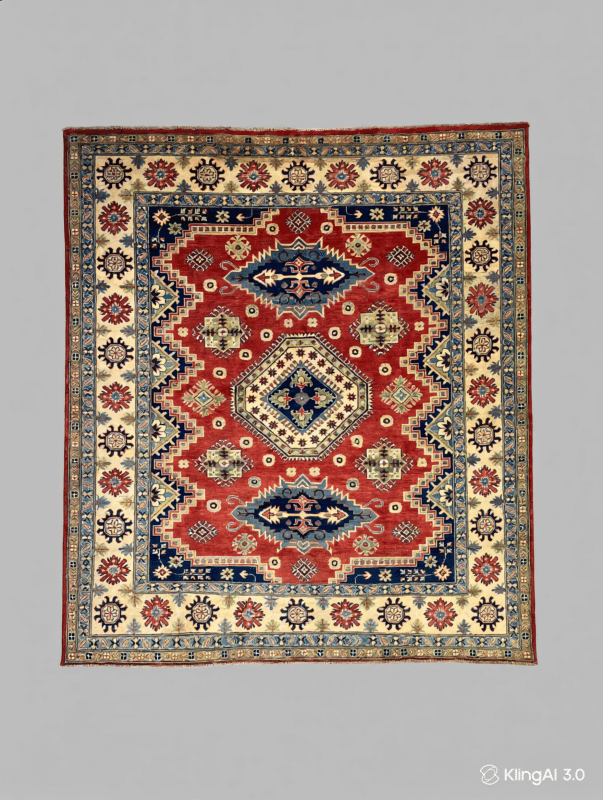
- Caucasian Rugs: Hailing from the Caucasus mountain region, these pieces are famous for sharp geometric shapes, abstract animal symbols, and primary color palettes.
- Afghan and Pakistani Rugs: Famous for rich deep reds, rust tones, and dark navy accents, these rugs often feature repeated elephant-foot patterns (Bokhara) and dense wool construction.
Exploring the History and Heritage of Persian Craftsmanship
Persian weaving represents one of the oldest decorative arts in human history, dating back over 2,500 years. The art form reached its peak during the Safavid Dynasty in the 16th century, when royal workshops produced intricate court carpets that are preserved in museums worldwide today.
What sets Persian pieces apart from other regional textiles is the meticulous preservation of village, tribal, and city weaving traditions. Weaving hubs such as Tabriz, Isfahan, Kashan, Nain, and Shiraz each developed signature styles, knot densities, and color palettes. The knowledge required to dye raw wool using madder root, indigo, and pomegranate peels is passed down through families, preserving the authenticity of each creation.
At Shabahang Rugs, we curate authentic hand-knotted inventory directly tracing its lineage back to these iconic Persian weaving centers, offering clients pieces that serve as living history.
Technical Differences: Weaving Knots and Construction
A major structural distinction between Persian rugs and other Oriental rugs lies in the knotting technique used during hand-weaving on the loom.
The Persian Knot (Senneh Knot)
The Persian knot is an asymmetrical knot. The yarn is wrapped around one warp thread and passed under the adjacent warp thread before being cut. This asymmetrical structure leaves an open space on one side, allowing weavers to tie smaller, tighter knots per square inch (KPSI). As a result, Persian weavers can create fluid, curving lines, detailed floral motifs, and intricate pictorial designs.
The Turkish Knot (Ghiordes Knot)
Many non-Persian Oriental rugs, particularly those from Turkey and parts of the Caucasus, utilize the double or symmetrical Turkish knot. The yarn is wrapped around two warp threads, pulling both ends through the center. This creates an exceptionally sturdy, thick, and durable weave that excels at displaying bold, geometric patterns, though it is less suited for curved line details.
Side-by-Side Comparison: Persian vs. Oriental Rugs
To help you quickly differentiate between these two terms when evaluating fine floor coverings, consider this overview of primary traits:
| Distinction Aspect | Persian Rugs | Broad Oriental Rugs (Non-Persian) |
| Geographic Origin | Strictly modern-day Iran (historical Persia) | Turkey, India, China, Pakistan, Nepal, Caucasus |
| Primary Knot Style | Asymmetrical (Senneh knot) | Symmetrical (Ghiordes knot) or regional variations |
| Design Characteristics | Intricate floral curves, central medallions, arabesques | Varies widely; geometric, tribal, dragon, or pictorial |
| Typical Materials | Fine hand-spun wool, silk accents, cotton foundation | Wool, silk, cotton, jute, and goat hair |
| Visual Precision | High detail fluid lines due to asymmetric weave | Bold angles, structured geometry, or open fields |
| Value & Collectibility | Highest historical prestige and investment value | Ranges from everyday decorative to collector-grade |
Pattern Symbolism and Design Aesthetics
Both Persian and Oriental floor coverings communicate cultural stories through integrated symbols, but their visual languages differ significantly across geographic borders.
Persian Motifs and Meaning
Persian art leans heavily into poetic, naturalistic, and architectural themes:
- The Paisley (Boteh): Represents a teardrop-shaped cypress tree symbolizing eternal life and endurance.
- The Shah Abbas Motif: Features delicate palmettes and sweeping lotus blossoms along fluid vine-scrolls.
- Garden of Paradise: Depicts stylized streams, birds, and flowering plants arranged in panel grids.
Non-Persian Oriental Motifs
Other Oriental rug regions showcase symbols rooted in local folklore or philosophy:
- Chinese Dragon: Symbolizes ultimate power, strength, and good fortune for the household.
- Caucasian Geometric Stars: Represent protection against evil spirits and bad luck.
- Turkish Latch-Hook: Stylized geometric hooks designed to trap evil eyes and secure prosperity.
Evaluating Value, Quality, and Investment Potential
Because both Persian and Oriental rugs are woven by hand, evaluating quality requires examining construction metrics rather than relying solely on regional names. However, market trends consistently place authentic Persian pieces at the upper tier of valuation.
Key indicators that influence overall value include:
- Construction Method: Genuine pieces must be 100% hand-knotted. Machine-made options that copy Persian or Oriental designs lack the durability and long-term appreciation of authentic textiles.
- Knot Density (KPSI): Higher knot counts per square inch allow for richer artistic detail and reflect hundreds of hours of labor, increasing market value.
- Material Excellence: Pure hand-spun wool rich in natural lanolin or pure natural silk foundations ensure the textile ages gracefully.
- Natural Dyes vs. Synthetic Dyes: Vegetable and plant-based dyes develop a soft, glowing patina over decades, whereas cheap chemical dyes can fade harshly under sunlight.
Due to their unmatched historical recognition and fine knot capabilities, authentic Persian rugs generally maintain superior resale and antique appreciation over time compared to mass-produced regional alternatives.
How to Select the Ideal Rug for Your Interior Space
Choosing between a Persian rug and another Oriental style ultimately depends on your interior design goals, room layout, and personal taste.
- For Formal and Traditional Spaces: A fine Persian Kashan or Isfahan rug featuring a detailed central medallion and curving floral vines complements traditional dining rooms, elegant living spaces, and formal sitting areas.
- For Modern and Contemporary Aesthetics: A bold geometric Turkish or Caucasian Oriental rug offers striking contrast against sleek furniture, clean lines, and minimal architectural elements.
- For Eclectic or Rustic Homes: Tribal Persian rugs (such as Qashqai or Shiraz) or Indian floral rugs add warm, rich textures that harmonize with wooden accents and casual leather seating.
Discover Authentic Fine Rugs at Shabahang Rugs
Whether you are captivated by the intricate artistry of a classic Persian medallion carpet or the bold geometry of a regional Oriental design, investing in a genuine hand-knotted piece guarantees quality that lasts generations.
At Shabahang Rugs, we take immense pride in offering an unmatched collection of authentic handcrafted masterpieces. Our experienced team assists homeowners, collectors, and interior designers in navigating fiber selections, knot densities, and room proportions to find the perfect match. Visit Shabahang Rugs today to explore our online gallery or contact us to schedule a private consultation.
Frequently Asked Questions
Are all Persian rugs considered Oriental rugs?
Yes. “Oriental rug” is a general geographic term that includes all hand-knotted rugs made in Asian and Middle Eastern countries. Because Persia (Iran) is located within this region, every Persian rug is an Oriental rug.
Are Persian rugs higher quality than other Oriental rugs?
Persian rugs are globally renowned for their exceptionally high knot density, intricate asymmetrical knotting, and rich artistic history. While fine museum-quality rugs exist in other Oriental regions (such as Turkey or Silk Road centers), Persian rugs hold the highest reputation for investment value and craftsmanship.
How can I tell if a rug is hand-knotted or machine-made?
Turn the rug over to inspect the back. On a hand-knotted rug, the individual knots are clearly visible, slightly uneven, and mirror the design on the front. Machine-made copies feature a stiff white backing, perfectly uniform stitching, and fringes that are sewn on after production rather than woven into the foundation.