
You’ve just finished cleaning your rug, expecting it to smell fresh and look revitalized. Instead, you notice the odor persists—or worse, it seems even stronger than before. This frustrating experience is more common than you might think, and understanding why your rug smells after cleaning is the first step toward achieving truly odor-free rugs.
Why Rug Odors Don’t Always Disappear
The problem with persistent rug odors lies in understanding where smells actually originate. Unlike surface dirt that sits on top of fibers, odor-causing contaminants penetrate deep into the rug’s construction, settling into the pile, foundation, and even the backing material.
Smells trapped deep in rug fibers: Surface cleaning methods like spot treatments or rental carpet cleaners only address the top layer of your rug. Meanwhile, bacteria, urine crystals, mold spores, and other odor sources remain embedded in lower layers where cleaning solutions never reach.
Surface cleaning vs. deep contamination: When you clean only the surface, you’re essentially masking the problem rather than eliminating it. The contamination underneath continues to produce odors, which eventually work their way back to the surface.
Why odor molecules reactivate with moisture: Many odor-causing substances become temporarily neutralized when dry but reactivate when exposed to moisture or humidity. This explains why rugs can smell fine initially after cleaning, only to develop odors days or weeks later when environmental conditions change.
Common Causes of Persistent Rug Odors
1. Pet Urine Crystals Embedded in the Rug
Pet urine is one of the most challenging odor issues because of its chemical composition. When urine dries, it forms crystallized salts that bond to rug fibers and foundations. These crystals are incredibly resilient and can’t be removed by simple surface cleaning.
The distinctive ammonia smell of pet urine becomes particularly noticeable when humidity rises. Moisture in the air reactivates the urine crystals, releasing odors that can be just as strong as when the accident first occurred. Even if you can’t see the stain anymore, the crystals remain active until properly treated with enzymatic cleaners and thorough extraction.
2. Mold & Mildew from Improper Drying
That musty, earthy smell after cleaning is often a telltale sign of mold or mildew growth. When rugs aren’t dried properly and completely, moisture becomes trapped in the fibers and foundation, creating the perfect environment for microbial growth.
This problem is especially common in basement settings or humid environments where air circulation is limited. Mold and mildew don’t just smell unpleasant—they can also cause health issues and permanently damage natural fibers. The longer moisture remains in a rug, the more likely mold will develop and spread throughout the structure.
3. Dirty Rug Padding or Backing
Many people focus exclusively on cleaning the rug’s surface while overlooking the padding underneath or the backing material. These areas absorb spills, pet accidents, and accumulated dust just as readily as the visible fibers.
When odors originate from the padding or backing, no amount of surface cleaning will solve the problem. The contamination sits below where most cleaning efforts reach, continuously producing smells that permeate upward through the rug. In severe cases, the padding may need to be replaced entirely.
4. Using the Wrong Cleaning Products
Not all cleaning products are created equal, and some can actually contribute to odor problems rather than solving them. Soap-based cleaners often leave sticky residues that attract dirt and trap odor-causing bacteria. These residues create a film on fibers that holds contaminants in place.
Fragrance-based cleaners present another issue. While they might temporarily mask odors with pleasant scents, they don’t eliminate the underlying cause. Once the fragrance dissipates, the original odor returns—sometimes combined with the artificial scent, creating an even more unpleasant smell.
5. Hard Water & Mineral Residue
Cleaning rugs with hard water introduces minerals like calcium and magnesium into the fibers. These minerals don’t rinse out easily and can create a sour or “wet dog” smell, especially when the rug gets damp.
Mineral buildup also attracts and holds onto other contaminants, making future odor problems more likely. The residue changes the pH balance of the rug fibers, which can affect how they respond to cleaning and their natural resistance to bacteria growth.
Why DIY Cleaning Often Makes Odors Worse
While do-it-yourself rug cleaning seems like a cost-effective solution, it frequently exacerbates odor issues rather than resolving them. Understanding these limitations helps explain why professional intervention becomes necessary.
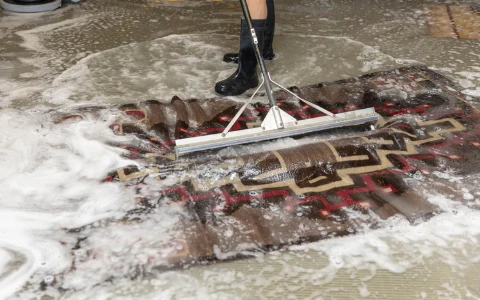
Over-wetting rugs: Home carpet cleaning machines and DIY methods often saturate rugs with excessive water. This over-wetting pushes contaminants deeper into the foundation and creates drying challenges that lead to mold growth.
Incomplete rinsing: Thorough rinsing is critical for removing cleaning solution residues and loosened contaminants. DIY equipment lacks the extraction power needed to fully rinse rugs, leaving behind substances that contribute to lingering odors.
No deep dust removal: Professional rug cleaning facilities begin with specialized dusting equipment that removes pounds of dry soil from deep within rugs. This crucial step, which cannot be replicated at home, eliminates a major source of musty odors.
Slow indoor drying: Laying a wet rug flat on your floor or hanging it in your garage creates a prolonged drying period—sometimes several days. During this time, bacteria and mold have ample opportunity to multiply, creating new odor problems that didn’t exist before cleaning.
How to Properly Remove Rug Odors
Immediate Solutions
For minor odor issues or as temporary measures while arranging professional cleaning, these approaches can provide some relief:
Baking soda: Sprinkle baking soda liberally over the rug surface, let it sit for several hours or overnight, then vacuum thoroughly. While this won’t solve deep contamination, it can neutralize surface odors temporarily.
Controlled ventilation: Increase air circulation around the rug using fans. Good airflow helps prevent moisture accumulation and reduces musty smells, though it won’t address embedded odors.
Sun exposure (limited): Brief exposure to direct sunlight can help dry and deodorize rugs naturally. However, prolonged sun exposure can fade colors, especially in handmade wool and Persian rugs, so use this method cautiously and for short periods only.
Long-Term Solutions
For persistent or recurring odor problems, more comprehensive approaches are necessary:
Enzyme treatments: Enzymatic cleaners break down organic matter like pet urine, food spills, and body oils at the molecular level. These specialized products work differently than traditional cleaners, actually digesting the odor-causing substances rather than just masking them.
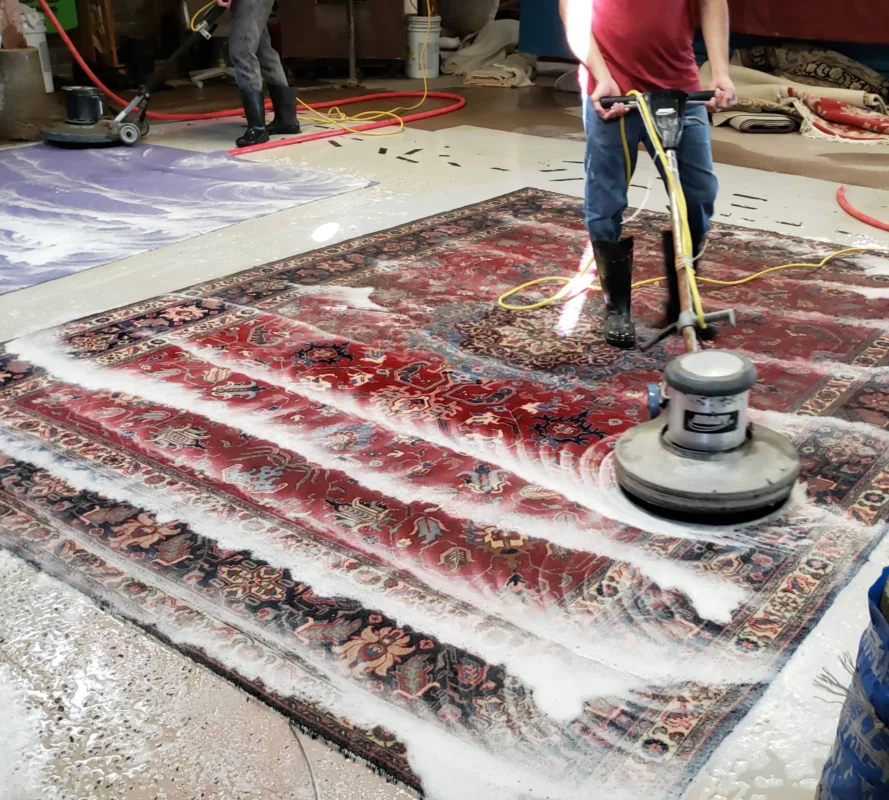
Professional deep washing: Full immersion washing in a controlled facility allows complete saturation with appropriate cleaning solutions, thorough rinsing, and proper extraction. This process reaches every layer of the rug’s construction, eliminating odors at their source.
Pad replacement if needed: When padding has absorbed significant contamination, replacing it becomes more effective than attempting to clean it. Fresh padding eliminates a major odor source and provides a clean foundation for your rug.
How Professionals Eliminate Rug Odors
Professional rug cleaning services like Shabahang Rugs use systematic approaches specifically designed for complete odor removal:
Dusting before washing: Specialized equipment removes dry soil and particulates that contribute to musty odors. This step alone can eliminate several pounds of dust from a single rug, immediately reducing odor-causing contamination.
Full immersion cleaning: Unlike surface cleaning methods, immersion washing submerges the entire rug in cleaning solutions. This allows the solution to penetrate every fiber and flush out embedded contaminants that cause persistent odors.
pH-balanced odor-neutralizing solutions: Professional-grade cleaning products are formulated to address specific odor types without leaving residues. These solutions neutralize odors chemically rather than simply covering them with fragrances.
Rapid drying systems: Controlled drying environments with proper temperature, humidity, and airflow ensure rugs dry completely within hours rather than days. This rapid drying prevents mold and mildew growth that causes new odor problems.
Odor testing before return: Reputable cleaning facilities inspect rugs thoroughly before returning them to clients, ensuring odors have been completely eliminated rather than just reduced.
How to Prevent Rug Odors in the Future
Prevention is always easier than remediation. These practices help maintain fresh-smelling rugs between professional cleanings:
Avoid over-wetting: When addressing spills at home, use minimal water and blot thoroughly. Extract as much moisture as possible immediately to prevent it from penetrating deep into the rug.
Use rug pads: Quality rug pads create air circulation beneath rugs, allowing moisture to evaporate rather than becoming trapped. This simple addition significantly reduces mold and mildew risk.
Control indoor humidity: Maintain relative humidity levels between 30-50% in your home. This range prevents mold growth while keeping rugs comfortable and fresh-smelling.
Schedule regular professional cleaning: Preventive maintenance through regular professional cleaning removes accumulated contaminants before they create odor problems. For most households, this means cleaning every 12-24 months, depending on use and exposure.
Act fast on spills: The longer any spill sits in a rug, the deeper it penetrates and the more difficult it becomes to remove completely. Immediate attention to accidents prevents them from becoming permanent odor sources.
When You Should Call a Professional Immediately
Certain odor situations indicate the need for immediate professional intervention:
Odor returns repeatedly: If smells keep coming back after cleaning attempts, the contamination is embedded too deeply for surface treatments to reach. Professional immersion washing becomes necessary.
Strong urine or mold smell: Intense odors from pet urine or mold growth indicate significant contamination that poses health risks. These situations require specialized treatment that only professionals can provide safely.
Rug feels stiff or crunchy: This texture indicates crystallized urine, dried cleaning residues, or mineral deposits—all of which require professional treatment to remove without damaging fibers.
Antique, Persian, or handmade rugs: Valuable rugs deserve expert care. Improper DIY odor removal attempts can cause color bleeding, fiber damage, or structural problems that destroy the rug’s value. Shabahang Rugs specializes in the delicate treatment these treasures require.
Final Thoughts
Persistent rug odors after cleaning indicate that contaminants remain embedded deep within the fibers, foundation, or backing where surface treatments cannot reach. Whether caused by pet urine crystals, mold growth, improper drying, wrong cleaning products, or mineral residues, these odors require comprehensive solutions that address the root cause rather than masking symptoms.
While temporary measures like baking soda can provide short-term relief, professional deep cleaning offers the only reliable path to permanent odor elimination. The combination of proper dusting, full immersion washing, appropriate cleaning solutions, and controlled rapid drying ensures that odors are completely removed rather than temporarily suppressed.
Frequently Asked Questions
Can baking soda remove deep rug odors?
Baking soda can neutralize light surface odors temporarily but cannot reach deeply embedded contamination. For persistent smells from pet urine, mold, or old spills, professional cleaning is necessary to eliminate odors at their source.
How long should a rug dry after washing?
Professionally cleaned rugs typically dry within 24-48 hours in controlled environments. Home-cleaned rugs may take 3-7 days depending on conditions. Extended drying times increase mold and mildew risk, which is why professional rapid-drying systems are preferable.
Is steam cleaning effective for odor removal?
Steam cleaning can address surface odors but often doesn’t penetrate deeply enough to eliminate embedded contaminants. Additionally, the moisture from steam cleaning can reactivate odors or create new mold problems if the rug doesn’t dry completely.
Can urine odor damage a rug permanently?
Pet urine can cause permanent damage if left untreated. The acid in urine breaks down dyes and weakens fibers over time. However, prompt professional treatment with enzymatic cleaners and thorough extraction can usually remove both the odor and prevent lasting damage.
Does rug padding hold odors?
Yes, rug padding absorbs spills and contaminants just like the rug itself. When padding becomes saturated with pet urine or other odor-causing substances, it may need replacement rather than cleaning. Professional assessment can determine whether padding can be salvaged or should be replaced.
Contact us at Shabahang Rugs
If your rug continues to smell even after cleaning, don’t let the problem persist. Shabahang Rugs offers professional rug cleaning services that permanently eliminate odors while protecting the integrity and beauty of your investment. Our specialized techniques safely remove pet urine, mold, mildew, and other deep-set contaminants from all rug types, including delicate handmade, Persian, and Oriental pieces.
Contact us at Shabahang Rugs today to schedule a consultation and discover how professional cleaning can restore your rug to its fresh, odor-free condition. Our experts will assess your specific odor challenges and provide customized solutions that deliver lasting results.
Call Us: (847) 256-5205
Visit: 3207 Lake Avenue, Wilmette, IL
Request a Free Quote: Click here Shabahang Rugs