
Rugs have long played an important role in interior design, but high-quality rugs can offer more than simple decoration. In many homes around the world, a well crafted rug is viewed as a lasting asset that combines beauty, heritage, and financial value.
When comparing hand-knotted rugs vs machine-made rugs, the differences go far beyond appearance. These rugs vary significantly in craftsmanship, materials, lifespan, and long-term value. Understanding these distinctions helps homeowners decide whether investing in a handmade rug is worth the higher upfront cost.
This guide explores the investment value of hand-knotted rugs, examining durability, resale potential, and the craftsmanship that allows these textiles to become generational heirlooms.
Why Rugs Can Be Considered an Investment
Many people purchase rugs simply to enhance their interior spaces, yet some rugs function similarly to collectible artwork or antique furniture. High-quality handmade rugs often retain value for decades and sometimes appreciate over time and Rug Cleaning.
Several factors contribute to the investment potential of rugs.
Luxury Decor Assets
Premium rugs are often classified as luxury home furnishings. Similar to fine furniture or artwork, a well made rug can enhance the overall value and aesthetic of a space. Interior designers frequently treat hand-knotted rugs as statement pieces that anchor an entire room.
Collectible Textiles
Certain rugs become collectible due to their craftsmanship, age, and regional origin. Persian rugs from weaving centers such as Kashan or Isfahan are known for intricate designs and exceptional knot density. Collectors often seek these pieces for their cultural and artistic significance.
Generational Heirlooms
Unlike most modern decor items, handmade rugs are designed to last for generations. Families frequently pass down Persian or Oriental rugs as heirlooms because the materials and craftsmanship allow them to endure decades of use.
This long lifespan is one of the reasons many buyers begin to view rugs not simply as decor but as long-term investments.
What Are Hand-Knotted Rugs?
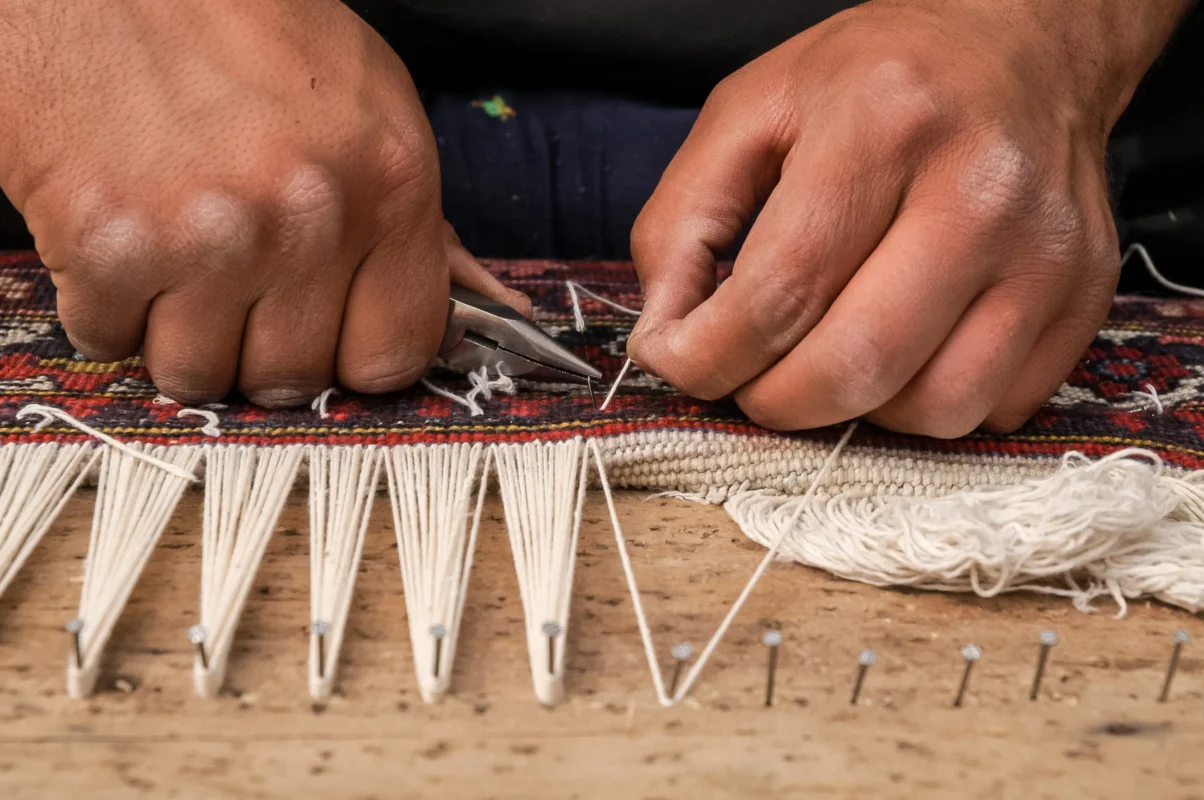
Hand-knotted rugs are created using a traditional weaving technique that dates back centuries. Each knot is tied individually by skilled artisans working on a loom.
Because of this process, every handmade rug carries unique characteristics and subtle variations.
How They Are Made
The production process for hand-knotted rugs begins with a loom that holds the rug foundation. This foundation consists of warp and weft threads that form the structure of the rug.
Artisans tie thousands or even millions of individual knots around the warp threads. These knots create the rug’s pile and pattern. Once the knotting is complete, the rug is trimmed, washed, and finished.
Depending on size and knot density, creating a single rug can take months or even years.
Materials Used
Hand-knotted rugs typically use high-quality natural fibers such as:
- Wool
- Silk
- Cotton
Wool rugs are especially popular because wool is durable, resilient, and naturally stain resistant. Silk rugs are known for their luxurious texture and fine detail. Cotton is commonly used in the foundation to provide structural strength.
Natural fibers also age gracefully, developing character over time instead of wearing out quickly.
Why They Are Considered Art
Many experts consider handmade rugs a form of textile art. Each rug reflects the creativity and skill of the artisan who produced it.
Patterns are often influenced by cultural traditions that have been passed down through generations of Persian weavers. Regions like Kashan and Isfahan are famous for their distinctive designs and high knot density.
Because no two handmade rugs are exactly identical, each piece carries artistic and cultural value.
What Are Machine-Made Rugs?
Machine-made rugs are produced using automated power looms that replicate rug patterns quickly and efficiently. These rugs are widely available and often cost significantly less than handmade alternatives.
Power Loom Production
In a machine-made rug factory, computerized looms weave thousands of stitches per minute. Patterns are programmed into the machines and reproduced with precision.
This process allows manufacturers to produce large quantities of rugs in a short period of time.
Synthetic Materials
Machine-made rugs frequently use synthetic fibers such as:
- Polypropylene
- Polyester
- Nylon
These materials are inexpensive and easy to manufacture, which helps keep retail prices low. However, synthetic fibers generally do not have the same durability or natural appearance as wool or silk.
Mass Production Advantages
The biggest advantage of machine-made rugs is affordability. Because they are produced quickly and in large quantities, they are accessible to a wider range of consumers.
They also offer consistent patterns and colors, which can be appealing for homeowners seeking uniform designs.
However, these benefits come with trade-offs in terms of durability, uniqueness, and long-term value.
Hand-Knotted vs Machine-Made Rugs: Investment Comparison
The differences between handmade and machine-made rugs become clearer when comparing key attributes such as lifespan, materials, and resale value.
| Attribute | Hand-Knotted Rugs | Machine-Made Rugs |
|---|---|---|
| Production Method | Individual knots tied by artisans | Manufactured using power looms |
| Materials | Wool, silk, cotton | Polypropylene, polyester, nylon |
| Production Time | Months to years | Hours to days |
| Average Lifespan | 50 to 100+ years | 5 to 15 years |
| Price Range | $2,500 to $15,000+ | $300 to $1,200 |
| Resale Value | High and sometimes appreciates | Minimal resale value |
| Uniqueness | One-of-a-kind designs | Identical patterns |
| Repairability | Can be repaired or rewoven | Limited repair options |
From an investment perspective, these differences are significant. Hand-knotted rugs offer durability and potential appreciation, while machine-made rugs primarily serve short-term decorative purposes.
Cost-Per-Year Analysis: Which Rug Is the Better Investment?
A helpful way to evaluate rug value is by examining the cost per year of ownership.
Consider this example.
| Rug Type | Initial Cost | Lifespan | Annual Cost |
|---|---|---|---|
| Hand-Knotted Rug | $8,000 | 50 years | $160 per year |
| Machine-Made Rug | $1,200 replaced every 5 years | 50 years | $240 per year |
Although the handmade rug costs significantly more upfront, its long lifespan results in a lower annual cost over time.
Additionally, high-quality handmade rugs may retain resale value or even appreciate, which further strengthens their investment potential.
Resale Value and Appreciation Potential
One of the most important aspects of rug investment is value retention.
Hand-knotted rugs, especially those made in well known weaving regions, often maintain strong resale value.
Antique Rug Market
Antique rugs that are more than 80 to 100 years old can become highly desirable among collectors. Their rarity and craftsmanship contribute to increased market demand.
Cultural Craftsmanship
Rugs produced using traditional Persian weaving techniques often attract buyers who appreciate cultural heritage and artistry.
Handmade rugs from regions such as Kashan and Isfahan are especially valued for their detailed patterns and high knot density.
Collector Demand
Collectors often search for investment quality Oriental rugs because they represent a combination of art, history, and craftsmanship.
Machine-made rugs rarely have this kind of collector interest because they are widely produced and easily replaced.
Sustainability and Long-Term Value
Sustainability has become an important factor for many homeowners when choosing decor and furnishings.
Hand-knotted rugs align well with sustainable design principles.
Natural Materials
Handmade rugs are typically made from renewable natural fibers such as wool, silk, and cotton. These materials are biodegradable and environmentally friendly compared to synthetic alternatives.
Slow Craftsmanship
The process of weaving a rug by hand emphasizes quality and longevity rather than mass production. This slow production model reduces waste and encourages durable design.
Reduced Replacement
Because handmade rugs can last for generations, they reduce the need for frequent replacements. This contributes to a more sustainable approach to interior design.
Machine-made rugs, in contrast, often end up being replaced every few years.
How to Identify a Hand-Knotted Rug
If you are considering purchasing an investment-quality rug, it is important to know how to recognize a genuine hand-knotted piece.
Here are a few simple indicators.
Visible Knots on the Back
Turn the rug over and examine the back. In a handmade rug, the pattern will be visible and you will see individual knots.
Machine-made rugs often have a uniform backing or glued layer.
Fringe Integrated Into the Foundation
In authentic hand-knotted rugs, the fringe is part of the rug’s foundation rather than being sewn on later.
Slight Pattern Variations
Because each knot is tied by hand, minor irregularities or variations in pattern are common. These details are signs of authentic craftsmanship.
Why Collectors Prefer Hand-Knotted Rugs
Collectors and interior design professionals consistently favor hand-knotted rugs for several reasons.
Rarity
Every handmade rug is unique. The time required to produce each piece limits supply and increases rarity.
Cultural Heritage
Hand-knotted rugs reflect centuries of Persian weaving traditions. They represent a rich history of textile craftsmanship that continues today.
Artistic Value
The intricate designs, natural dyes, and detailed knot work transform many handmade rugs into true works of art.
For these reasons, collectors often seek high-quality handmade rugs when building decorative or investment collections.
Conclusion
When comparing hand-knotted vs machine-made rugs, the differences in craftsmanship, durability, and long-term value are clear.
Machine-made rugs offer affordability and convenience, making them suitable for temporary or budget-friendly decorating. However, they rarely provide lasting value or resale potential.
Hand-knotted rugs, on the other hand, combine artistry, cultural heritage, and exceptional durability. With lifespans that can exceed 100 years, these rugs often become generational heirlooms that retain both aesthetic and financial value.
For homeowners who appreciate authentic craftsmanship and long-term investment pieces, handmade Persian rugs represent a timeless choice.
Explore Shabahang Rugs’ collection of authentic hand-knotted rugs designed to last generations and bring lasting beauty to your home.
Frequently Asked Questions
Are hand-knotted rugs a good investment?
Yes. High-quality hand-knotted rugs can last for decades and may increase in value depending on their craftsmanship, materials, and origin.
Why are hand-knotted rugs so expensive?
Hand-knotted rugs require months or years of manual labor by skilled artisans and use premium natural materials such as wool and silk.
Do machine-made rugs have resale value?
Most machine-made rugs have minimal resale value because they are mass produced and widely available.
How long do hand-knotted rugs last?
With proper care, many hand-knotted rugs can last between 50 and 100 years or even longer.