
Handmade rugs represent significant investments in artistry, craftsmanship, and timeless beauty. Whether you own a Persian, Oriental, or hand-knotted wool rug, proper maintenance is essential to preserving its value and appearance for generations. Vacuuming handmade rugs is a fundamental part of rug care, yet many well-intentioned owners unknowingly damage their treasured pieces through improper techniques. Understanding the right and wrong way to vacuum handmade rugs ensures you protect these delicate textiles while keeping them clean and beautiful.
Why Handmade Rugs Need Special Vacuuming Care
Unlike machine-made carpets designed for aggressive cleaning, handmade rugs require a gentler approach due to their unique construction and materials.
Unique weaving techniques: Hand-knotted rugs feature individual knots tied by skilled artisans. These knots create the pile and pattern, but they can be loosened or damaged by aggressive vacuuming methods that pull at the fibers.
Natural fibers: Wool, silk, and cotton are living materials with specific characteristics. Wool fibers are more resilient but can still be damaged by excessive friction. Silk is exceptionally delicate and requires minimal contact. Cotton foundations, while sturdy, can weaken if subjected to harsh treatment.
Fringe and edge sensitivity: The fringes on handmade rugs are not decorative additions—they’re the exposed warp threads that form the rug’s structural foundation. Vacuuming over fringes can pull threads loose, cause tangling, or even tear them from the rug entirely.
Risk of pile distortion: Improper vacuuming can crush the pile, create uneven wear patterns, or cause premature aging of the fibers. The goal is to remove surface dirt without disturbing the rug’s structure.
Value and craftsmanship protection: Handmade rugs often appreciate in value over time when properly maintained. Damage from incorrect vacuuming can significantly diminish both aesthetic appeal and monetary worth.
The Right Way to Vacuum Handmade Rugs
Proper vacuuming technique protects your investment while effectively removing dust and debris that can wear down fibers over time.
Choose the Right Vacuum
The vacuum you select makes all the difference when caring for handmade rugs.
No beater bar or rotating brush: These aggressive mechanical components are designed for synthetic carpeting. On handmade rugs, they pull fibers, loosen knots, and cause excessive shedding. Always disable or avoid beater bars entirely.
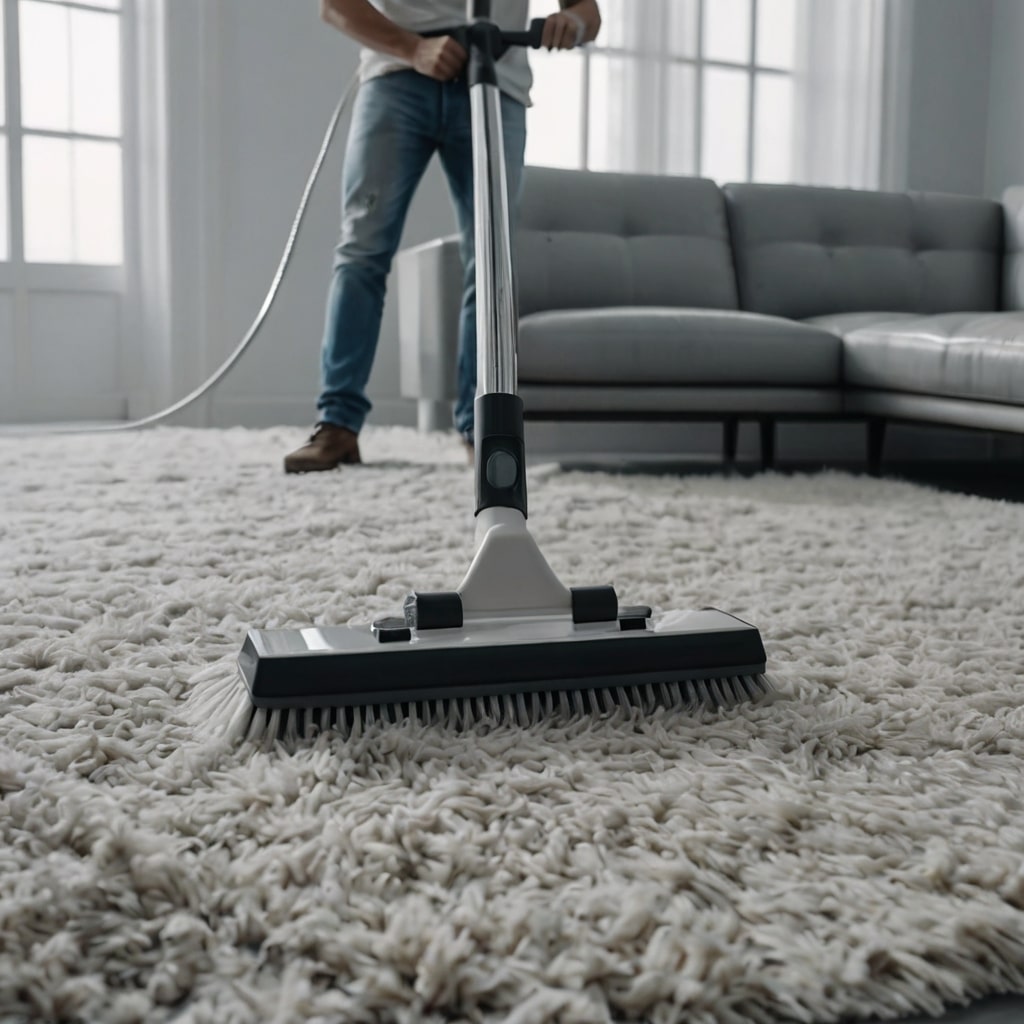
Suction-only vacuum preferred: A canister vacuum with adjustable suction and no rotating brush head is ideal for handmade rug care. The gentle suction lifts surface dirt without damaging delicate fibers.
Adjustable suction settings: Different rug types require different suction levels. Silk rugs need minimal suction, while durable wool rugs can handle moderate power. The ability to adjust ensures you never over-clean.
Correct Vacuuming Technique
Even with the right equipment, technique matters tremendously.
Vacuum in the direction of the pile: Run your hand across the rug to determine pile direction—the fibers should feel smooth in one direction and rough in the other. Always vacuum in the smooth direction to avoid pulling fibers backward, which can damage the knots and cause premature wear.
Light, slow passes: Multiple gentle passes are more effective and safer than one aggressive pass. This approach lifts surface debris without stressing the rug’s structure. Think of it as a massage rather than a deep scrub.
Lift the vacuum at edges instead of dragging: When you reach the rug’s borders, lift the vacuum head and reposition it rather than dragging it over the edges. This prevents catching and pulling the binding or selvedge.
Clean both sides occasionally: Dirt and dust can accumulate beneath your rug. Every few months, flip the rug over and vacuum the back with very light suction. This removes debris from the foundation without disturbing the decorative pile. Never vacuum the back of fragile antique or silk rugs.
Safe Fringe Cleaning
Fringes require special attention because they’re integral to the rug’s structure.
Never use vacuum directly on fringes: The suction can tangle, tear, or pull fringe threads loose. Vacuum up to the fringe line, then stop.
Use a handheld vacuum or gentle brushing: For fringe cleaning, use a handheld vacuum on the lowest setting held slightly above the fringe, or gently brush the fringe with a soft-bristle brush to remove surface dust. For stubborn dirt, professional cleaning is the safest option.
The Wrong Way to Vacuum Handmade Rugs
Avoiding these common mistakes prevents costly damage to your handmade rugs.
Using high-suction vacuums on delicate rugs: Industrial-strength or upright vacuums designed for deep-pile synthetic carpets create too much force for delicate silk or antique rugs. This excessive suction can pull fibers loose and damage the foundation.
Using beater bars: Rotating brushes aggressively beat the rug’s surface, pulling at individual knots and causing the rug to shed excessively. This mechanical action accelerates wear and can permanently damage the pile structure.
Vacuuming against the pile direction: Moving against the natural lay of the fibers forces them backward, stressing the knots and potentially loosening them over time. This also creates an uneven appearance and accelerates fiber breakdown.
Dragging the vacuum over fringes: Perhaps the most common mistake, this action tangles, tears, and destroys fringes. Damaged fringes can lead to unraveling at the rug’s edges, requiring expensive repairs.
Over-vacuuming: While regular maintenance is important, excessive vacuuming causes unnecessary wear. More is not always better when it comes to delicate textiles.
Wet or steam vacuuming: Never use wet vacuum systems or steam cleaners on handmade rugs without professional guidance. Moisture can cause dyes to bleed, wool to felt, and foundations to rot. These methods also rarely dry the rug completely, creating conditions for mold and mildew growth.
How Different Handmade Rugs Should Be Vacuumed
Not all handmade rugs are created equal. Understanding your specific rug type helps you adjust your approach.
Wool Handmade Rugs
Wool is the most common and durable material in handmade rugs, offering natural resilience.
Can handle more frequent vacuuming: Quality wool rugs withstand regular maintenance when done correctly. High-traffic areas benefit from weekly vacuuming with proper technique.
Avoid aggressive brushes: Even durable wool can be damaged by beater bars. Stick to suction-only methods with moderate power settings.
Silk Rugs
Silk rugs are prized for their lustrous beauty and fine detail but require exceptional care.
Very gentle suction only: Use the lowest suction setting available. Silk fibers are delicate and can be easily pulled or damaged.
No deep passes: Light surface vacuuming is sufficient. Silk rugs are typically placed in low-traffic areas where they accumulate less dirt.
Avoid heavy foot traffic: Prevention is key with silk rugs. Place them in areas where they’ll be admired rather than walked on frequently, reducing the need for intensive cleaning.
Antique Rugs
Antique and vintage rugs require the most careful handling due to age-related fragility.
Extremely delicate: Fibers may have weakened over decades or centuries. Foundation materials may be brittle. What appears sturdy might actually be quite fragile.
Minimal vacuuming; more dusting preferred: For truly valuable antiques, gentle dusting with a soft brush or professional rug beating may be safer than vacuuming. Shabahang Rugs offers specialized care for antique pieces that preserves their integrity.
Vacuuming Frequency for Handmade Rugs
Finding the right balance between cleanliness and preservation depends on rug placement and household conditions.
High-traffic areas: Rugs in entryways, hallways, and living rooms benefit from vacuuming 1–2 times weekly. This removes abrasive dirt particles that can cut fibers when walked on.
Low-traffic areas: Bedrooms, formal dining rooms, and guest spaces need vacuuming only once every 1–2 weeks. Less foot traffic means less dirt accumulation.
Antique and silk rugs: These delicate pieces require light monthly vacuuming at most. Consider professional assessment if you’re unsure about safe cleaning frequency.
Homes with pets or children: Increase frequency slightly to manage hair, dander, and tracked-in debris, but maintain gentle technique regardless of how often you vacuum.
When to Dust Instead of Vacuum
Some situations call for alternative cleaning methods that are gentler than vacuuming.
Rugs with heavy fringe: Extensive fringing makes vacuuming risky. Professional rug dusting removes embedded dirt without endangering delicate edges.
Fragile antique carpets: Age-weakened fibers may not withstand even gentle suction. Traditional rug beating or specialized dusting equipment used by professionals safely removes dust without fiber contact.
Lightweight hand-knotted rugs: Very fine, thin rugs can be lifted or moved by vacuum suction. These benefit from gentle brushing or professional dusting services.
Rug beating and dusting methods: Professional facilities use controlled dusting equipment that vibrates rugs to release embedded particles without touching the fibers. This mechanical agitation is far gentler than vacuuming while being more effective at deep cleaning.
Additional Tips to Protect Handmade Rugs
Beyond proper vacuuming, these practices extend your rug’s lifespan and beauty.
Use rug pads: Quality pads prevent slipping, provide cushioning that reduces wear, and create airflow beneath the rug that prevents moisture buildup and mildew.
Rotate rugs every 6 months: Regular rotation distributes wear evenly and prevents permanent traffic patterns, sun fading in specific areas, and uneven soil accumulation.
Remove shoes indoors: The single most effective way to reduce dirt is preventing it from entering your home. Outdoor shoes track in abrasive particles that gradually cut rug fibers.
Schedule professional cleaning yearly: Even with perfect home maintenance, handmade rugs benefit from annual professional cleaning. Experts remove embedded dirt that vacuuming cannot reach, restoring vibrancy and protecting fibers.
When Vacuuming Is Not Enough
Recognize the signs that your rug needs professional attention beyond routine vacuuming.
Embedded dirt: When dirt works its way deep into the pile and foundation, surface vacuuming becomes ineffective. You may notice the rug feels heavy, colors look dull, or dust clouds appear when you walk on it.
Odor: Persistent smells indicate organic matter, pet accidents, or moisture issues that require professional extraction and treatment.
Stains: Spills that penetrate beyond the surface need specialized cleaning solutions and techniques to prevent permanent damage or dye bleeding.
Pet hair buildup: While regular vacuuming removes surface hair, pet fur works deep into rug fibers over time. Professional dusting equipment and washing remove this embedded hair along with associated dander and oils.
Shabahang Rugs specializes in professional cleaning that goes far beyond what home vacuuming can achieve, using gentle yet thorough methods specifically designed for handmade textiles
Frequently Asked Questions
Is vacuuming safe for hand-knotted rugs?
Yes, vacuuming is safe and necessary for hand-knotted rugs when done correctly. Use a suction-only vacuum without beater bars, vacuum in the direction of the pile, and avoid the fringes. Proper technique removes abrasive dirt that would otherwise damage fibers over time.
Should I vacuum my rug every day?
Daily vacuuming is unnecessary for most handmade rugs and may cause excessive wear. High-traffic areas benefit from 1–2 times weekly, while low-traffic placements need only weekly or bi-weekly vacuuming. Over-vacuuming can be as harmful as under-vacuuming.
How do professionals clean handmade rugs?
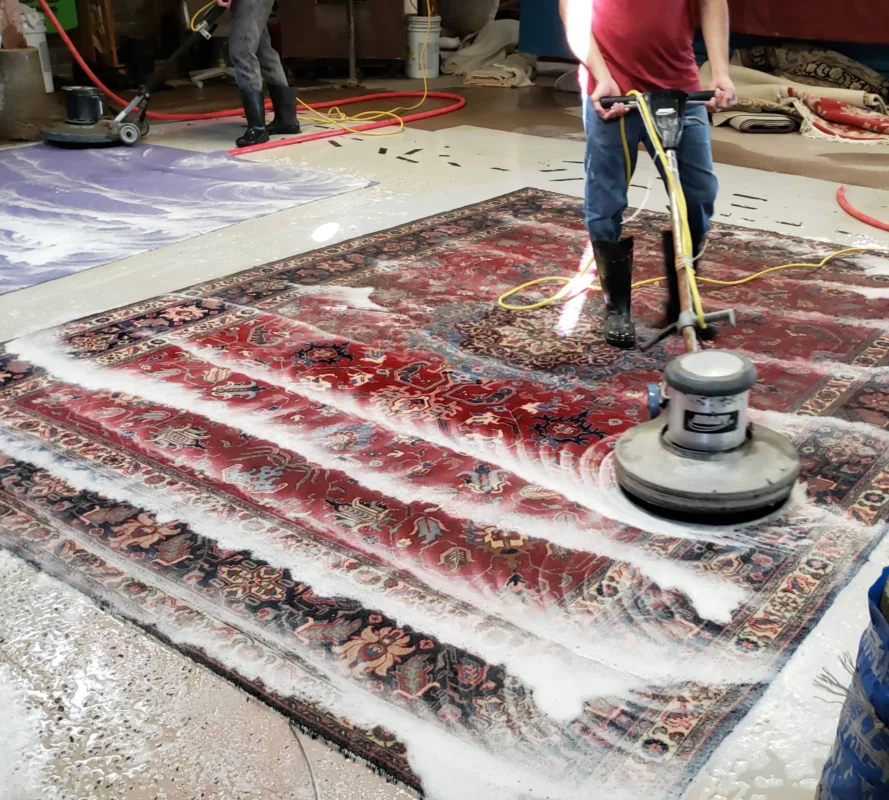
Professional rug cleaners use immersion washing techniques that fully saturate and rinse the rug, removing embedded dirt that vacuuming cannot reach. The process includes fiber-appropriate solutions, controlled drying conditions, and specialized equipment for dusting and grooming. This thorough approach safely cleans without damaging delicate materials.
Can vacuuming cause shedding?
Some shedding is normal in new handmade rugs as loose fibers from the weaving process work their way out. However, excessive shedding indicates improper vacuuming—usually from beater bars or vacuuming against the pile. If shedding continues beyond the first few months, evaluate your vacuuming method.
What is the safest vacuum for expensive rugs?
A canister vacuum with adjustable suction and no rotating brush attachment is safest for valuable handmade rugs. Models designed specifically for hardwood floors with rug attachments work well. Avoid upright vacuums with fixed beater bars, as these cannot be adequately gentled for delicate textiles.
Contact Shabahang Rugs for Expert Care
Proper vacuuming protects your handmade rug between professional cleanings, but even the best home maintenance cannot replace expert care. At Shabahang Rugs, we understand the intricate construction, delicate fibers, and cultural significance of handmade rugs. Our specialists provide comprehensive cleaning services tailored to your rug’s specific needs, whether it’s a contemporary hand-knotted wool piece or a priceless antique Persian carpet.
We invite you to contact Shabahang Rugs for professional assessment and cleaning services. Our team can evaluate your rug’s condition, recommend appropriate care schedules, and provide cleaning that safely removes years of embedded soil while preserving the beauty and value of your investment. Trust your treasured textiles to experts who treat each rug with the respect and specialized attention it deserves.
Call now: (847) 256-5205
Address: 3207 Lake Avenue, Wilmette, IL 60091
Request a Free Quote: Shabahang Rug Professional rug cleaning services in Maywood start with Shabahang Rugs—where experience, craftsmanship and results come together. Contact ustoday to schedule pick-up and delivery or request your free estimate.