
The intricate beauty of tribal, nomadic and village rugs represents centuries of cultural heritage and artisanal craftsmanship. Unlike machine-made carpets, these handwoven treasures require specialized cleaning approaches that honor their unique construction, materials and cultural significance. Understanding the distinctions between these rug types is essential for preserving their integrity and extending their lifespan through proper care.
Understanding Tribal, Nomadic & Village Rugs
Tribal, nomadic and village rugs each carry distinct characteristics rooted in their cultural origins and weaving traditions. Tribal rugs emerge from specific ethnic groups with deeply rooted weaving customs, often featuring bold geometric patterns and symbolic motifs that tell stories of their communities. Nomadic rugs are created by migratory peoples who weave as they travel, resulting in distinctive construction methods adapted to portable looms and available materials. Village rugs come from settled communities where weavers have access to established workshops and more consistent resources.
These differences in origin directly affect cleaning approaches. The weaving environment, available materials and traditional techniques all influence how each rug responds to moisture, agitation and cleaning solutions. A nomadic rug woven outdoors with locally sourced wool requires different handling than a village rug created in a controlled workshop setting.
Key Structural Differences That Impact Cleaning
The construction variations between these rug types present unique cleaning challenges. Knot density varies significantly, with tribal rugs often displaying lower knot counts between 30 to 80 knots per square inch, while village rugs may feature tighter weaving ranging from 100 to 200 knots per square inch. This density difference affects water absorption rates and drying times during the cleaning process.
Wool quality represents another critical distinction. Nomadic weavers typically use hand-spun wool from their own flocks, creating fibers with irregular thickness and natural lanolin content. Village weavers may have access to more uniform, commercially prepared wool. These variations influence how the rug responds to cleaning solutions and mechanical action.
Foundation materials differ as well. Tribal and nomadic rugs frequently employ wool foundations, which are more flexible but require careful moisture management. Village rugs might incorporate cotton foundations that provide stability but demand different drying techniques. The irregular weaving patterns common in tribal and nomadic pieces, including intentional asymmetries and variations in tension, require gentler handling than the more uniform construction of village rugs.
Natural Dyes & Their Cleaning Challenges
Many tribal, nomadic and village rugs showcase the remarkable artistry of natural dyes derived from plants, minerals and insects. These vegetable and mineral dyes create rich, complex colors that develop beautiful patinas over time. However, they present specific cleaning challenges that demand expertise and caution.
Color instability risks are inherent in natural dye work. Unlike synthetic dyes that bond uniformly to fibers, natural dyes may have varying penetration depths and color fastness. Some colors, particularly reds from madder root and certain blues from indigo, can be especially vulnerable to pH changes in cleaning solutions.
Dye migration concerns become critical during the washing process. When moisture is introduced improperly, unstable dyes can bleed from one area to another, creating permanent discoloration. This risk intensifies with older rugs where dyes may have degraded over decades of use. At Shabahang Rugs, specialists understand these vulnerabilities and employ pre-testing protocols to assess dye stability before proceeding with full cleaning.
Why Standard Carpet Cleaning Can Damage These Rugs
Conventional carpet cleaning methods designed for synthetic or machine-made rugs can inflict irreversible damage on tribal, nomadic and village pieces. Excessive moisture from steam cleaning or saturating washes can cause wool foundations to shrink, warp, or develop mildew. The natural fibers in these handmade rugs absorb water differently than synthetic materials, requiring controlled moisture application.
High heat, whether from steam or rapid drying equipment, can damage delicate wool fibers, cause natural dyes to run and alter the rug’s dimensions. Aggressive agitation from rotary machines or harsh brushing can break hand-spun wool fibers, distort irregular weaving patterns and damage the knot structure that holds these rugs together.
Chemical residues from standard cleaning solutions pose additional threats. Many commercial carpet shampoos contain alkaline compounds that strip natural lanolin from wool, leaving fibers brittle and vulnerable. These harsh chemicals can also alter the pH balance that keeps natural dyes stable, triggering color changes or bleeding.
Cleaning Approach for Tribal Rugs
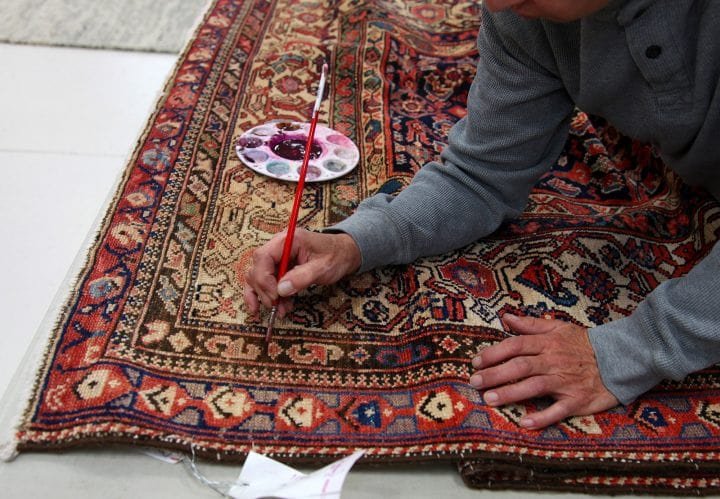
Proper tribal rug cleaning begins with gentle dust removal that respects the lower knot density and looser construction typical of these pieces. Specialized equipment removes embedded particles without stressing the weave structure. The cleaning process continues with low-moisture or controlled washing techniques that introduce water gradually, allowing professionals to monitor dye stability and fiber response.
Individual color management becomes essential when working with tribal rugs featuring multiple natural dyes. Each color area may require different pH levels or treatment times. Flat drying techniques prevent distortion and maintain the rug’s original shape, as hanging wet tribal rugs can cause stretching in areas where the weave is less dense.
Cleaning Approach for Nomadic Rugs
Nomadic rugs demand particular attention to their looser weaves and portable loom construction characteristics. The cleaning process must account for the irregularities and variations that make these pieces unique. Protecting fringe and edges takes priority, as these elements often show the greatest wear from their creators’ traveling lifestyles.
Careful agitation control prevents damage to the hand-spun wool fibers common in nomadic weaving. The irregular fiber thickness requires gentler mechanical action than uniform commercial wool can withstand. Slow, temperature-controlled drying preserves the natural oils in hand-spun wool while preventing the shrinkage that can occur when nomadic rugs with wool foundations dry too quickly.
Cleaning Approach for Village Rugs
Village rugs, with their typically denser construction and more uniform weaving, still require specialized care distinct from standard carpet cleaning. The higher knot density means these rugs can trap more soil deep within their pile, necessitating thorough but gentle extraction methods.
Stabilizing dyes before washing remains crucial, even though village rugs may sometimes use more consistent dyeing processes. Pre-treatment testing identifies any colors that might bleed or fade during cleaning. Balanced moisture control ensures the tighter weave receives adequate cleaning without oversaturation that could damage cotton foundations or cause extended drying times.
Fiber conditioning after cleaning helps restore the natural softness and luster of village rug wool. This step replaces protective oils removed during washing and enhances the rug’s appearance and longevity.
Drying Methods That Preserve Shape & Color
Proper drying techniques are critical for maintaining the structural integrity and aesthetic qualities of tribal, nomadic and village rugs. Avoiding hanging during the drying process prevents gravity-induced stretching and distortion, especially in areas where the weave may be looser or the foundation more flexible.
Climate-controlled drying rooms at facilities like Shabahang Rugs provide optimal conditions with regulated temperature and humidity levels. This controlled environment allows rugs to dry evenly and completely without the rapid moisture loss that can cause shrinkage or the slow drying that invites mildew growth.
Preventing curling and distortion requires supporting the entire rug surface during drying. Professional facilities use specialized racks or flat surfaces that distribute weight evenly, maintaining the rug’s natural dimensions and preventing the edges from curling upward as moisture evaporates.
Signs These Rugs Need Professional Cleaning
Recognizing when your tribal, nomadic, or village rug requires professional attention helps prevent damage from accumulated soiling. Embedded dust that dulls the colors and fills the spaces between knots indicates it’s time for thorough cleaning. This dust acts as an abrasive, grinding against fibers with every footstep and accelerating wear.
Color dullness suggests that soil has coated the wool fibers, obscuring their natural vibrancy. Professional cleaning removes this buildup and reveals the true richness of natural dyes. Odors from pet accidents, spills, or simple age penetrate deep into handmade rug fibers and require specialized extraction methods beyond surface treatments.
Uneven wear patterns may indicate that soil accumulation has become severe in high-traffic areas. Addressing this issue promptly through professional cleaning can help balance the wear and extend the rug’s usable life.

Long-Term Benefits of Proper Cleaning
Investing in specialized cleaning for tribal, nomadic and village rugs yields significant long-term benefits. Preserved craftsmanship ensures that the weaver’s skill and artistry remain visible for future generations. Proper cleaning techniques protect the structural integrity of hand-tied knots, hand-spun fibers and delicate natural dyes.
Maintained cultural value keeps these pieces as authentic representations of their origins. Unlike harsh cleaning that can strip away the patina and character developed over decades, appropriate methods honor the rug’s history while refreshing its appearance. This cultural preservation adds immeasurable value beyond the monetary.
Extended lifespan represents perhaps the most practical benefit. Tribal, nomadic and village rugs that receive proper care can serve families for generations, becoming cherished heirlooms. Regular professional cleaning removes the abrasive soil that accelerates fiber degradation, prevents moth damage through thorough inspection and addresses issues before they become irreparable.
Frequently Asked Questions
Can tribal rugs be cleaned at home?
While surface maintenance like regular vacuuming can be done at home, deep cleaning of tribal rugs should be left to professionals. The natural dyes, hand-spun wool and irregular construction require expertise and specialized equipment that home cleaning methods cannot provide. Attempting DIY cleaning risks dye bleeding, shrinkage and permanent damage to these valuable pieces.
Are village rugs more durable than nomadic rugs?
Village rugs typically feature higher knot density and more uniform construction, which can contribute to durability in high-traffic settings. However, nomadic rugs possess their own form of durability through flexible construction and resilient hand-spun wool. The difference lies more in their intended use and maintenance requirements than in overall quality.
Do all tribal rugs use natural dyes?
Most authentic tribal rugs created through traditional methods use natural dyes, though some newer pieces may incorporate synthetic dyes. The transition to synthetic dyes began in the late 19th century, so older tribal rugs almost exclusively feature vegetable and mineral dyes, while contemporary pieces vary depending on the weaver’s access to materials and adherence to traditional methods.
Is fringe cleaning different for these rugs?
Yes, fringe on tribal, nomadic and village rugs requires careful attention. Unlike machine-made rugs where fringe is sewn on, handmade rug fringe represents the foundation warp threads and is integral to the structure. Cleaning must protect these elements from tangling, breaking, or color bleeding while removing embedded soil.
Can professional cleaning restore faded colors?
Professional cleaning can reveal colors hidden under layers of soil and grime, making rugs appear more vibrant. However, true fading from light exposure or chemical damage cannot be reversed through cleaning alone. Some color restoration techniques exist for valuable pieces, but prevention through proper care and display practices remains the best approach.
Shabahang Rugs for Expert Care
When your tribal, nomadic, or village rug requires professional attention, trust the specialists who understand the unique demands of these cultural treasures. Shabahang Rugs combines decades of expertise in handmade rug care with state-of-the-art facilities designed specifically for cleaning delicate, valuable pieces. Our team recognizes that each rug tells a story worth preserving and employs cleaning methods that honor traditional craftsmanship while utilizing modern technology.
From initial inspection and dye testing through controlled washing, careful drying and final conditioning, every step of our process prioritizes your rug’s long-term preservation. We understand the investment these pieces represent, both financially and culturally and treat each rug with the respect it deserves. Contact us at Shabahang Rugs today to schedule a consultation and discover how proper professional care can extend the life and beauty of your treasured handmade rugs for generations to come.
Contact Shabahang Rugs:
Call now: (847) 256-5205
Address: 3207 Lake Avenue, Wilmette, IL 60091
Request a free Quote: Shabahang Rugs