
After a fire, the visible damage to your home is only part of the problem. Smoke odor penetrates deep into fabrics, making rugs one of the most challenging items to restore. Professional smoke odor removal rugs require specialized expertise and equipment that goes beyond simple cleaning. Understanding professional smoke and fire odor removal methods helps you make informed decisions about whether your rugs can be saved and what restoration process they require.
How Smoke & Fire Odors Penetrate Rugs
Smoke doesn’t simply settle on rug surfaces. Microscopic smoke particles, often smaller than a human hair, penetrate deep into fibers, backing, and foundation materials. These particles contain tar, ash, and various chemicals from burned materials that bond with rug fibers at a molecular level.
Wool, cotton, and natural fiber rugs are particularly absorbent, acting like sponges for smoke particles and odors. The backing and foundation layers trap these particles between fibers, making surface cleaning ineffective. This explains why vacuuming and commercial spray deodorizers don’t work for fire-damaged rug cleaning. These methods only address surface residue while leaving embedded particles untouched, resulting in persistent odors that return as soon as the masking agents dissipate.
Types of Fire & Smoke Damage in Rugs
Different fire conditions create distinct types of smoke damage, each requiring specific treatment approaches.
Dry Smoke
Dry smoke results from fast-burning, high-temperature fires that consume materials quickly. It produces fine, powdery soot particles that spread easily and can travel throughout a home. While these particles are easier to remove if treated quickly, they still penetrate deep into rug fibers. Dry smoke typically leaves a less visible residue but can cause significant odor problems if not professionally addressed.
Wet Smoke
Wet smoke comes from slow-burning, low-temperature fires that smolder rather than flame. This type produces sticky, thick residue that clings tenaciously to surfaces. Wet smoke creates deep odor penetration that’s particularly difficult to neutralize. The sticky nature of wet smoke residue makes it spread easily during improper cleaning attempts, potentially causing more damage than the original fire.
Protein Smoke (Kitchen Fires)
Kitchen fires create protein smoke when organic materials like meat, grease, or food products burn. This produces an especially strong, persistent odor with oily residue buildup. Protein smoke has a distinctive acrid smell that’s nearly impossible to eliminate without professional intervention. The organic nature of this residue requires specialized enzyme treatments for complete odor neutralization.
Why DIY Smoke Odor Removal Fails
Many homeowners attempt removing smoke smell from carpets and rugs using store-bought products, only to discover the odor returns within days or weeks. Commercial deodorizers merely mask odors instead of neutralizing them at the source. These products create a temporary improvement by covering the smoke smell with stronger fragrances, but they don’t remove the embedded smoke particles causing the problem.
Worse, improper cleaning methods can push smoke deeper into fibers, making professional restoration more difficult and expensive. Wet cleaning without proper extraction drives soot particles into the rug’s foundation where they become nearly impossible to reach. Additionally, amateur cleaning risks soot staining and spreading as disturbed particles redistribute across previously unaffected areas.
The complexity of soot removal from rugs requires specialized equipment and expertise. Without proper knowledge, well-intentioned cleaning attempts often cause irreversible damage to valuable pieces.
Professional Smoke & Fire Odor Removal Process
Professional odor removal services follow systematic protocols developed through years of experience with fire-damaged materials. The multi-step process addresses both visible damage and invisible odor-causing particles.
Pre-Inspection & Damage Assessment
Expert technicians begin with comprehensive inspection to determine appropriate treatment. They examine fiber type to select compatible cleaning agents, assess burn damage to evaluate structural integrity, and conduct safety evaluation to identify potential health hazards from toxic residue. This assessment determines whether the rug can be saved and which restoration methods will be most effective.
Dry Soil & Soot Removal
Before any wet cleaning, specialists perform specialized vacuuming using HEPA filtration systems. This critical step removes loose soot particles that would otherwise spread during washing. Professional-grade equipment captures microscopic particles that household vacuums simply redistribute into the air. Thorough dry soil removal prevents soot from setting into fibers during subsequent wet cleaning phases.
Deep Washing & Decontamination
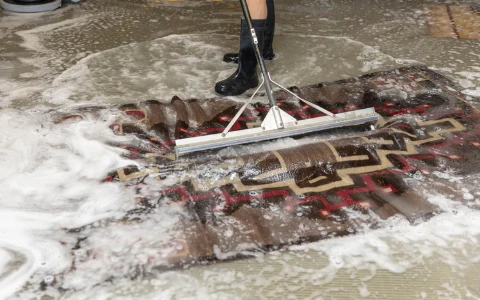
True smoke odor removal from rugs requires complete immersion washing. Shabahang Rugs and other professional facilities use specialized immersion tanks where rugs are fully submerged and agitated to flush out embedded smoke particles. pH-balanced cleaning agents specifically formulated for smoke damage break down tar and ash residue without harming delicate fibers. This process reaches particles trapped deep in the foundation that surface cleaning cannot access.
Odor Neutralization Treatments
After washing, specialists apply targeted treatments to eliminate remaining odor molecules. Enzyme treatments break down organic compounds in protein smoke, neutralizing odors at the molecular level. Thermal fogging introduces microscopic deodorizing particles that penetrate as deeply as smoke particles, neutralizing odors throughout the rug’s structure.
For severe cases, ozone treatment provides powerful oxidation that destroys odor-causing molecules. However, this aggressive treatment must only be performed off-site in controlled environments, as ozone can damage certain materials and poses health risks if not properly managed. Professional facilities like Shabahang Rugs use ozone treatment judiciously and only when other methods prove insufficient.
Controlled Drying
Proper drying is essential for preventing mold and secondary odors. Professional facilities use climate-controlled drying rooms with precise temperature and humidity management. This prevents the musty odors that often develop when rugs dry too slowly. Controlled drying also prevents shrinkage and distortion that can occur with improper drying techniques.
Rugs That Can Be Saved After Smoke Damage
Material composition significantly affects restoration potential. Wool rugs demonstrate excellent resilience to smoke damage. Wool’s natural structure allows deep cleaning without structural compromise, and professional restoration can typically eliminate smoke odors completely from wool pieces.
Synthetic rugs made from polypropylene or nylon also respond well to fire restoration rug cleaning. These materials resist permanent odor absorption better than natural fibers and tolerate aggressive cleaning methods. Light-to-moderate smoke exposure on synthetic rugs usually results in successful restoration.
The key factor is timing. Rugs treated within days of smoke exposure have significantly better outcomes than those left untreated for weeks or months. Smoke particles bond more firmly to fibers over time, making early intervention critical for successful rug deodorization after fire.
Rugs That Often Cannot Be Saved
Despite advanced restoration techniques, some rugs cannot be safely or effectively restored. Severe burn damage that compromises structural integrity makes restoration impossible regardless of sentimental or monetary value. When foundation materials are charred or significantly weakened, the rug cannot be safely cleaned and used.
Heavy soot saturation that has penetrated completely through backing and foundation may exceed restoration capabilities. In extreme cases, the concentration of toxic residue makes complete decontamination impossible or prohibitively expensive.
Silk and viscose rugs with severe staining present unique challenges. These delicate materials are highly susceptible to permanent discoloration from smoke exposure. Water used in cleaning can cause additional damage to already compromised silk fibers, often making restoration attempts counterproductive.
Rugs exposed to contaminated firefighting water may harbor bacteria, chemicals, or sewage that create health hazards beyond simple smoke odor. The combination of fire damage and water contamination often renders rugs unsafe for restoration.
How Long Professional Odor Removal Takes
The timeline for complete smoke and fire odor removal from rugs varies based on damage severity and rug characteristics. The inspection phase typically requires one to two days for thorough assessment and testing to determine the appropriate treatment protocol.
Cleaning and deodorization generally takes three to seven days, depending on the treatments required. Simple cases with light smoke exposure may complete faster, while severe damage requiring multiple treatment cycles extends the timeline.
Drying and final inspection adds another two to five days. Rushing this phase risks mold development and incomplete odor elimination. Professional facilities monitor rugs throughout drying to ensure complete moisture removal before final quality checks.
Total restoration time typically ranges from one to three weeks. While this seems lengthy, proper restoration cannot be rushed without compromising results. Attempting to accelerate the process risks permanent odor retention or material damage.
Safety Considerations After Fire Damage
Fire-damaged rugs pose significant health concerns beyond unpleasant odors. Toxic residue from burned synthetic materials, plastics, and chemicals can remain in soot particles embedded in fibers. These substances may include carcinogens, heavy metals, and other hazardous compounds.
Health risks are particularly acute for children and pets who spend time on floor surfaces. Young children crawling on contaminated rugs face exposure through skin contact and hand-to-mouth behavior. Pets lying on rugs absorb chemicals through their skin and ingest particles during grooming.
The importance of professional handling cannot be overstated. Trained technicians use protective equipment and work in controlled environments to safely process contaminated materials. They understand which chemicals are present in different types of smoke damage and apply appropriate safety protocols.
Attempting home cleaning of smoke-damaged rugs without proper protection exposes household members to concentrated toxins. Professional restoration facilities contain and dispose of hazardous materials according to environmental regulations, protecting both your family and the environment.
Preventing Lingering Smoke Odors
Success in fire restoration rug cleaning depends heavily on immediate professional intervention. Every day of delay allows smoke particles to bond more firmly with fibers, making removal exponentially more difficult. Contact professional odor removal services within 24 to 48 hours of fire exposure for optimal results.
Avoid home cleaning attempts before professional assessment. Well-meaning efforts to clean smoke-damaged rugs often cause irreversible harm. Wait for expert evaluation rather than risking damage that makes professional restoration impossible.
Proper storage during restoration protects rugs from additional contamination. If you must store rugs before professional pickup, roll them loosely with the pile facing inward and wrap in clean plastic to prevent smoke odor from spreading to other household items. Never store fire-damaged rugs with unaffected items, as smoke odor transfers readily to clean materials.
Frequently Asked Questions
Can smoke odor be removed from rugs?
Yes, professional smoke odor removal from rugs can successfully eliminate odors in most cases when treatment begins promptly. Advanced techniques including immersion washing, enzyme treatments, and odor neutralization address embedded smoke particles that cause persistent smells. However, success depends on damage severity, rug material, and how quickly restoration begins. Wool and synthetic rugs respond particularly well to professional treatment, while delicate materials like silk may have limitations.
How long does smoke smell last in rugs?
Without professional treatment, smoke smell can persist in rugs indefinitely. Smoke particles embedded in fibers don’t naturally dissipate over time. In fact, odors often intensify as temperature and humidity fluctuations release trapped particles. Some homeowners report smoke odors lingering for years in untreated rugs. Professional rug deodorization after fire is the only reliable method for permanent odor elimination rather than temporary masking.
Is it safe to clean fire-damaged rugs at home?
No, cleaning fire-damaged rugs at home is not safe and is strongly discouraged. Smoke residue contains toxic chemicals, carcinogens, and hazardous compounds from burned materials. Without proper protective equipment and ventilation, home cleaning exposes you to concentrated toxins. Additionally, improper techniques spread soot, push contaminants deeper into fibers, and often cause permanent damage. Fire-damaged rug cleaning requires professional equipment, controlled environments, and expertise to ensure both safety and effectiveness.
What chemicals remove smoke odor?
Professional facilities use several specialized chemicals for smoke odor removal. pH-balanced detergents break down tar and ash residue, while enzyme-based cleaners target organic compounds in protein smoke. Odor encapsulants trap and neutralize smell molecules, and oxidizing agents destroy odor-causing compounds at the molecular level. For severe cases, controlled ozone treatment provides powerful oxidation. The specific chemical combination depends on smoke type, rug material, and damage extent. These professional-grade products differ significantly from consumer deodorizers and require expert application for safe, effective results.
When should a smoke-damaged rug be replaced?
Replacement becomes necessary when restoration is unsafe, impossible, or economically impractical. Severe burn damage compromising structural integrity cannot be repaired. Heavy contamination from toxic smoke or firefighting chemicals may create permanent health hazards. Delicate materials like silk with extensive staining often cannot withstand the aggressive cleaning required for smoke removal. When restoration costs exceed the rug’s replacement value, replacement makes financial sense. Professional assessment provides honest guidance about whether your specific rug can be saved or should be replaced for safety and practical reasons.
Does ozone treatment damage rugs?
When properly administered by professionals, ozone treatment does not damage most rugs. However, ozone is a powerful oxidizing agent that requires careful control. It can affect certain dyes and finishes if exposure time or concentration is excessive. This is why reputable facilities like Shabahang Rugs only use ozone treatment off-site in controlled chambers with precise monitoring. Treatment parameters are adjusted based on rug material and condition. Amateur ozone use with consumer-grade machines risks material damage and creates health hazards, making professional administration essential.
Can smoke odor return after cleaning?
Properly executed professional cleaning permanently eliminates smoke odor. However, odors can appear to return if cleaning was incomplete or only addressed surface contamination. Some facilities use masking agents that provide temporary improvement but don’t remove embedded smoke particles, causing odors to resurface as fragrances fade. This is why deep immersion washing and odor neutralization are essential rather than surface deodorizing. When restoration is performed correctly using comprehensive methods, smoke odors do not return.
Are smoke-damaged rugs safe for children and pets?
Not until professionally cleaned and decontaminated. Smoke-damaged rugs contain toxic residue that poses particular risks to children and pets who have close floor contact. Children crawling on contaminated surfaces and putting hands in their mouths face direct exposure. Pets absorb chemicals through skin contact and ingest particles during grooming. Professional fire restoration rug cleaning removes hazardous compounds, making rugs safe for family use. Never allow children or pets on fire-damaged rugs before professional restoration confirms complete decontamination.
Will insurance cover smoke odor removal?
Most homeowner’s insurance policies cover smoke damage restoration, including professional rug cleaning, as part of fire damage claims. Coverage typically includes assessment, cleaning, deodorization, and restoration costs. Some policies cover temporary replacement if restoration requires extended time. However, coverage varies by policy and circumstance. Document damage with photographs, save all receipts, and work with restoration companies experienced in insurance claims. Shabahang Rugs works directly with insurance companies to streamline the claims process and ensure you receive appropriate coverage for professional smoke and fire odor removal from rugs.
How soon should rugs be cleaned after a fire?
Immediately. Contact professional odor removal services within 24 to 48 hours of smoke exposure for best results. Every hour of delay allows smoke particles to bond more firmly with fibers, making removal progressively more difficult. Quick action prevents permanent odor absorption and reduces restoration complexity and cost. Even if the fire occurred elsewhere in your home and rugs weren’t directly exposed to flames, smoke travels through ventilation systems and penetrates fabrics throughout the structure. Prompt professional assessment determines which rugs require treatment and prevents seemingly minor smoke exposure from becoming a permanent problem.
Contact Shabahang Rugs for Professional Fire & Smoke Restoration
When fire or smoke damage affects your valuable rugs, time is critical for successful restoration. Shabahang Rugs specializes in professional smoke and fire odor removal with decades of experience rescuing rugs from seemingly hopeless situations. Our comprehensive restoration process addresses both visible damage and invisible odor-causing particles, ensuring your rugs return safe, clean, and completely odor-free.
Our state-of-the-art facility features specialized equipment unavailable to general cleaners, including immersion washing tanks, climate-controlled drying rooms, and advanced odor neutralization systems. We understand the unique challenges different smoke types present and tailor treatment protocols to each rug’s specific material and damage extent.
Don’t risk your health or permanently damage valuable rugs with DIY cleaning attempts. Our expert technicians provide honest assessments about restoration potential, working transparently with you and your insurance company throughout the process. We handle everything from initial inspection through final delivery, giving you peace of mind during an already stressful time.
Contact us at Shabahang Rugs immediately following fire or smoke exposure for emergency assessment.
Call Shabahang Rugs Today
Call now: (847) 256-5205
Address: 3207 Lake Avenue, Wilmette, IL 60091
Request a free Quote: Shabahang Rugs