
Washing your fine rug is only half the battle—how you dry it afterward determines whether it emerges restored or damaged. At Shabahang Rugs, we’ve seen countless beautiful pieces compromised not by cleaning, but by improper drying techniques. Safe Rug Drying is critical because it requires the same level of expertise and care as the washing process itself, ensuring your rug retains its beauty, structure and longevity.
Why Rug Drying Is a Critical Step
Many rug owners focus exclusively on the cleaning process, assuming that once the dirt is removed, the hard part is over. In reality, improper drying can undo all the benefits of professional washing and introduce new problems that threaten your rug’s integrity.
Moisture retention creates the perfect breeding ground for mold and mildew. When rugs remain damp for extended periods, especially in their foundation layers, fungal spores colonize the fibers and backing materials. This biological activity doesn’t just cause health concerns—it actively degrades the structural integrity of your rug.
Odor development is one of the most immediate consequences of inadequate drying. That characteristic musty smell indicates bacterial growth within the fibers. Once established, these odors become nearly impossible to eliminate without another complete wash cycle.
Fiber and foundation damage accelerates when moisture lingers. Natural fibers like wool and silk become weakened when wet, and prolonged dampness causes them to break down at the molecular level. The foundation materials—cotton warp and weft threads—lose tensile strength, leading to warping, rippling, and eventual structural failure.
How Long Should Rugs Take to Dry?
The drying timeline varies significantly based on several factors, but rushing this process always leads to problems. Understanding realistic timeframes helps set proper expectations and prevents premature use of damp rugs.
For most hand-knotted wool rugs, complete drying typically requires 24 to 72 hours in a professionally controlled environment. Thicker pile rugs, densely knotted pieces, and those with cotton foundations need the longer end of this range. Silk rugs often dry slightly faster due to the fiber’s lower moisture absorption, usually within 24 to 48 hours.
Factors affecting drying time include pile height, knot density, foundation materials, humidity levels, air circulation, and ambient temperature. A high-density Persian rug with a thick wool pile will naturally take longer than a flatweave kilim. Similarly, drying times extend dramatically in humid climates or poorly ventilated spaces.
Attempting to accelerate drying through excessive heat or forced air creates new risks. The goal isn’t simply to remove moisture quickly—it’s to do so evenly and gently, preserving the rug’s structure throughout the process.
Why Temperature Control Matters
Temperature represents one of the most critical variables in safe rug drying. Too much heat causes irreversible damage, while insufficient warmth prolongs the process and increases contamination risks.
Heat damage to fibers occurs when temperatures exceed the tolerance levels of natural materials. Wool begins to felt and shrink at temperatures above 140°F (60°C), while silk proteins denature and weaken when exposed to similar heat levels. Even synthetic fibers can melt or deform under excessive temperatures.
Shrinkage risks multiply when heat combines with moisture. The combination causes protein-based fibers to contract and bond together in ways that cannot be reversed. A rug that fits a room perfectly before washing might return several inches smaller if dried at improper temperatures.
Color fading and dye migration accelerate under heat. High temperatures cause certain dyes to become unstable, leading to bleeding, running, or permanent color loss. Vegetable dyes, particularly those in antique rugs, are especially vulnerable to heat-induced fading.
The ideal drying temperature range for most rugs falls between 70°F and 85°F (21°C to 29°C)—warm enough to facilitate evaporation without stressing the materials. At Shabahang Rugs, we maintain precise climate control to ensure consistent, safe drying conditions.
Professional Rug Drying Methods
Professional facilities employ sophisticated approaches that home methods simply cannot replicate. These controlled environments protect your investment while ensuring thorough, even drying.
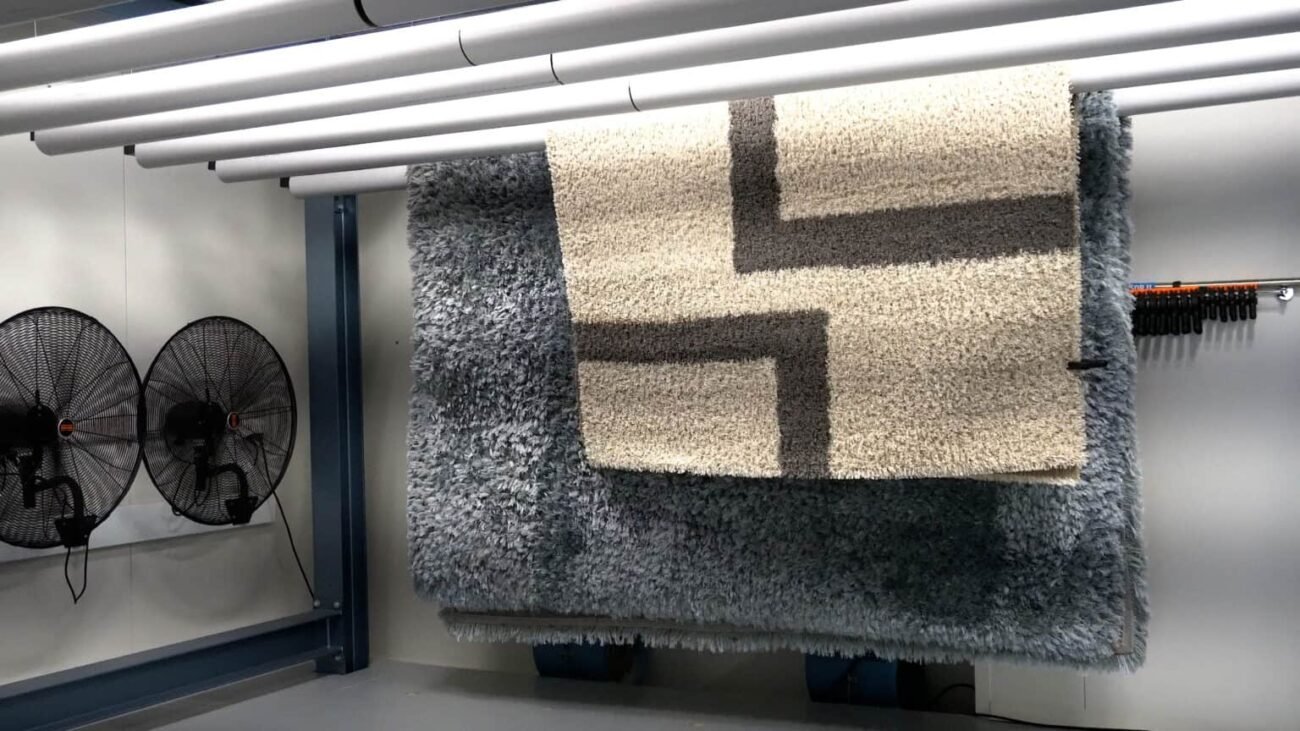
Climate-controlled drying rooms maintain optimal temperature and humidity levels regardless of outdoor conditions. These specialized spaces remove the variables that make home drying so unpredictable. Consistent conditions ensure that every part of the rug dries at the same rate.
Airflow management involves strategic placement of commercial-grade dehumidifiers and air movers that create gentle, consistent circulation without creating localized hot spots or over-drying certain areas. The air movement must be sufficient to carry away moisture without being so forceful that it distorts the rug’s shape.
Moisture monitoring through specialized equipment allows technicians to track drying progress objectively. Moisture meters measure residual dampness in both surface pile and foundation layers, ensuring that no hidden moisture remains trapped within the rug’s structure.
Even drying techniques include rotating rugs periodically, ensuring no areas remain in contact with surfaces for too long, and using specialized drying racks that allow air circulation on both sides simultaneously.
Risks of Sun-Drying Rugs
While sunlight might seem like a natural, cost-free drying method, it poses significant risks to fine rugs.
UV color fading represents the most immediate concern. Direct sunlight contains ultraviolet radiation that breaks down dye molecules, causing irreversible color loss. Even a few hours of direct sun exposure can noticeably fade vibrant colors, particularly reds, blues, and purples derived from natural dyes.
Uneven drying occurs because sunlight heats the exposed surface while the underside remains cooler and damper. This temperature differential causes the rug to dry at different rates from top to bottom, potentially leading to warping or curling.
Foundation stress results when the top of a rug contracts as it dries while the bottom remains swollen with moisture. This uneven tension can permanently distort the rug’s shape and weave structure.
Drying Different Types of Rugs
Each rug type requires specific drying considerations based on its fiber content and construction method.
Wool rugs are relatively forgiving but still require careful attention. Their natural lanolin content provides some water resistance, but the thick wool pile retains substantial moisture that must be removed gradually. Hanging heavy wool rugs while wet can cause stretching and distortion.
Silk rugs demand the most delicate handling. Silk fibers lose strength dramatically when wet and can break if subjected to tension or excessive heat. These pieces should always dry flat in controlled conditions with minimal handling.
Cotton rugs, including many kilims and dhurries, dry relatively quickly but are prone to shrinkage if exposed to heat. They require careful temperature monitoring and even support during drying.
Synthetic rugs tolerate higher temperatures than natural fibers but can still suffer from heat distortion. Their backing materials, often latex or similar compounds, may break down if dried improperly.
Signs a Rug Has Not Dried Properly
Recognizing incomplete or improper drying helps you address problems before they become permanent.
Musty odor is the most obvious indicator. Any smell of dampness, mildew, or staleness means moisture remains trapped in the fibers or foundation. This requires immediate re-drying before mold establishes itself.
Stiff texture suggests that residual moisture has caused fibers to begin felting or that cleaning solution residue has concentrated during improper drying. Properly dried rugs should feel soft and supple.
Curling or warping at the edges or throughout the rug indicates uneven drying that has caused differential shrinkage. While minor cases might resolve with professional stretching, severe warping may be permanent.
Color changes, including darkening or the appearance of water stains, suggest that dyes have migrated during the drying process or that contaminants have concentrated in certain areas as water evaporated.
Why DIY Rug Drying Often Fails
Home environments lack several critical components necessary for safe rug drying.
Limited airflow in typical homes means moisture has nowhere to go. Without commercial dehumidification and air movement, damp rugs can take a week or more to dry—far too long to prevent microbial growth.
Incorrect temperature is nearly universal in DIY attempts. Homes are either too cool (slowing drying to unsafe durations) or people use excessive heat sources like radiators or hair dryers that damage fibers.
Overlapping or folding rugs to save space traps moisture between layers and creates perfect conditions for mold growth. Rugs must have airflow on all sides to dry properly.
Indoor humidity issues vary by season and climate. In humid regions or during rainy periods, ambient humidity may actually add moisture to a drying rug rather than removing it.
How Proper Drying Extends Rug Lifespan
The connection between correct drying and longevity cannot be overstated.
Preserving fibers through gentle, even drying maintains their structural integrity for decades. Fibers that haven’t been heat-damaged or weakened by prolonged dampness retain their strength, luster, and resilience.
Maintaining shape and texture ensures your rug remains flat, properly aligned, and soft underfoot. Properly dried rugs return to service looking and feeling exactly as they should, with no distortion or stiffness.
Preventing long-term odor problems eliminates the bacterial and fungal colonization that creates persistent smells. Once these organisms establish themselves, they’re extremely difficult to eradicate completely.
Contact Shabahang Rugs for Professional Rug Drying
At Shabahang Rugs, we understand that proper drying is where expertise truly matters. Our climate-controlled facilities, specialized equipment and trained technicians ensure that your valuable rugs dry safely, evenly and completely—preserving their beauty and extending their lifespan for generations.
Don’t risk your investment with improper home drying methods. Contact us at Shabahang Rugs today to learn more about our professional rug cleaning and drying services, and discover why careful drying makes all the difference in rug care.
Call Shabahang Rugs Today
Call now: (847) 256-5205
Address: 3207 Lake Avenue, Wilmette, IL 60091
Request a free Quote: Shabahang Rugs