
A small tear in your rug doesn’t have to mean the end of its life. Many minor damages—a pulled thread here, a frayed edge there—can be addressed at home with basic tools and careful technique for rug repair. Understanding when you can safely perform rug repair yourself, and when to call in professionals, helps you protect your investment while keeping your home looking its best.
This guide walks you through repairing small tears in various rug types, from everyday cotton rugs to more delicate handwoven pieces. You’ll learn what tools you need, step-by-step repair methods, and most importantly, how to recognize when a tear requires expert restoration rather than a DIY fix.
Why Minor Rug Tears Happen
Rug tears occur through normal wear and tear, but understanding the common causes helps you prevent future damage.
Furniture Movement: Dragging furniture across rugs creates friction that can catch and pull fibers. Sharp furniture legs dig into rug surfaces, especially when weight shifts during rearranging. Over time, these small snags accumulate into visible tears.
Pet Claws: Dogs and cats with untrimmed nails can hook rug fibers while running or scratching. Even well-behaved pets cause gradual damage through everyday movement across rugs. The repetitive nature of this wear eventually creates small holes or unraveling sections.
Vacuum Damage: Vacuum cleaners with beater bars or rough edges can catch loose threads and pull them. This is particularly common along rug edges where binding may have loosened slightly. One aggressive pass with the wrong vacuum setting can turn a minor loose thread into a spreading tear.
Age and Fiber Deterioration: Older rugs naturally experience fiber breakdown. Sunlight exposure weakens materials over time, making them more susceptible to tearing. High-traffic areas wear faster, creating thin spots that eventually tear through.
Manufacturing Weak Points: Machine-made rugs sometimes have structural weaknesses where backing glue didn’t adhere properly or where seams meet. These spots become vulnerable points where tears initiate.
Ignoring small tears allows them to spread. A quarter-inch tear can quickly become several inches as daily foot traffic pulls the damaged area further apart. What might take twenty minutes to repair today could require professional restoration in a few weeks if left unaddressed.
Identify the Type of Tear
Different tears require different approaches. Accurately identifying your rug’s damage determines which repair method will work.
Straight Tear: A clean split in the rug pile, usually running in one direction. This often happens when something sharp cuts through fibers or when tension pulls the rug in opposite directions. Straight tears are among the easiest to repair at home.
Edge Tear: Damage along the rug border where binding or serging has come loose. The rug backing may still be intact, but decorative edging has separated. Edge tears spread quickly if not addressed, as the structural support at the rug perimeter fails.
Hole Formation: A complete break through both pile and backing, creating an actual gap in the rug. Small holes result from burns, sharp objects puncturing through, or severe pet damage. These require more extensive repair including backing reinforcement.
Unraveling From Loose Fibers: Individual threads pulling out of the rug foundation, typically starting at edges or weak points. This creates a progressively larger damaged area as adjacent fibers lose their anchoring and pull free. Unraveling indicates the rug’s foundation structure has been compromised.
Handmade vs. Machine-Made Differences: Handmade rugs show individual knots that can sometimes be re-tied if damaged. The foundation structure in handwoven pieces like those from Shabahang Rugs consists of warp and weft threads holding individual knots. Machine-made rugs have fibers tufted or woven into latex or synthetic backing, which repairs differently. Understanding your rug’s construction determines whether DIY repair is appropriate and which method to use.
Tools You’ll Need for DIY Rug Repair
Having the right supplies before starting ensures cleaner repairs and better results.
Heavy-Duty Needle: A curved upholstery needle works best for most rug repairs. The curve helps you work through thick rug backing without having to reach underneath. Choose needles with large eyes that accommodate thicker threads.
Matching Thread or Yarn: Use thread that matches your rug’s color and fiber content as closely as possible. For wool rugs, wool yarn creates the most durable repair. Cotton thread works for cotton rugs. The closer your match, the less visible your repair will be.
Rug Backing Fabric: Heavy canvas or burlap provides reinforcement for damaged backing. This adds structural support behind your repair, preventing the tear from reopening. Choose material with similar weight to your rug’s original backing.
Fabric Glue: Specialized rug adhesive or fabric glue that remains flexible when dry. Avoid super glue or rigid adhesives that will crack with movement. The glue should be washable and safe for the rug materials you’re working with.
Clips or Pins: Small binder clips or straight pins hold torn edges in alignment while you work. This keeps everything positioned correctly as you stitch, resulting in cleaner repairs.
Sharp Scissors: Trim loose threads and cut backing fabric precisely. Dull scissors fray fibers and create messy edges that make repairs harder.
Optional Items: Tweezers help manipulate small threads. A thimble protects your finger when pushing needles through thick material. Clear tape can temporarily hold very small tears while you prepare to stitch.
Gather all supplies before starting. Stopping mid-repair to search for tools can cause your careful alignment to shift.
Step-by-Step Guide to Repair a Minor Rug Tear
Follow these steps for the most common small tears in everyday rugs. This method works for wool, cotton, and synthetic rugs with minor damage.
1. Clean and Prepare the Area
Clear the damaged section of any dirt or debris. Vacuum gently around the tear, avoiding the damaged fibers themselves. Lay the rug flat on a clean work surface where you can access both front and back easily.
Examine the tear closely under good lighting. Identify all loose threads and determine the full extent of the damage. Sometimes what appears as a small surface tear extends further into the backing.
2. Align the Torn Fibers Carefully
Bring the torn edges together as precisely as possible. The goal is returning the rug to its original position before the damage occurred. Use your fingers to align pile fibers so they match the surrounding undamaged area.
Secure the alignment with small clips or pins on the front side. Place these just outside the damaged area so they hold position without interfering with your repair work. Check from multiple angles to ensure the edges meet evenly without gaps or overlaps.
3. Stitch the Tear (For Wool/Cotton/Handmade Rugs)
Thread your needle with matching yarn or thread. Knot the end securely. Working from the back of the rug, bring the needle up through the backing near one edge of the tear.
Use a simple running stitch or whipstitch across the tear, pulling edges together gently but firmly. Don’t pull so tight that the rug bunches or puckers—the repair should lie flat and level with surrounding areas. Space your stitches about one-quarter inch apart for small tears, closer together for longer damage.
As you stitch, periodically check the front side to ensure pile fibers remain properly aligned. Adjust if needed before continuing. When you reach the end of the tear, make several securing stitches in place, then knot off on the back side.
4. Reinforce the Backing
Cut a piece of backing fabric slightly larger than the repaired tear—about one inch beyond the damage on all sides. Apply fabric glue to one side of this patch.
Press the glued patch firmly against the back of your repaired area, covering your stitches. Smooth out any air bubbles or wrinkles. Place a heavy book over the patch area and let the glue cure completely according to manufacturer instructions, usually several hours or overnight.
This backing reinforcement prevents the tear from reopening under stress and distributes tension across a larger area rather than concentrating it at the weakest point.
5. Seal Edges to Prevent Further Damage
Once the backing patch has fully dried, apply a thin line of fabric glue along the very edges of the tear on the back side. This seals any loose fiber ends and prevents fraying.
Let this final application dry completely before returning the rug to use. The first few days after repair, avoid placing heavy furniture directly on the repaired area. Give the repair time to fully set before subjecting it to normal wear.
How to Fix Frayed Rug Edges at Home
Edge damage is one of the most common rug problems and often the easiest to address at home.
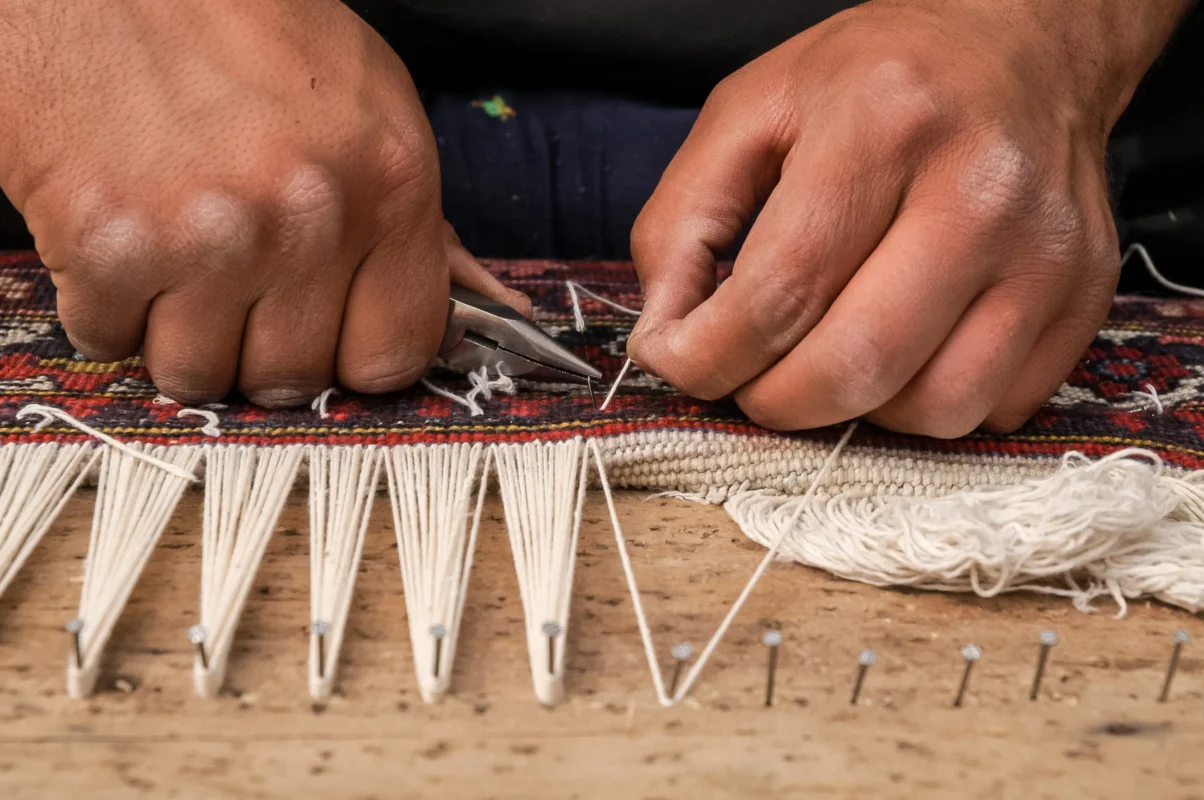
Securing Loose Edges: If the binding or serging along your rug edge has simply come loose but isn’t completely damaged, you can often re-secure it. Thread a curved needle with matching thread and stitch the loose binding back to the rug edge using a whipstitch. Work carefully to maintain even tension so the edge lies flat.
Binding Tape Method: For edges where the original binding has deteriorated, rug binding tape offers a temporary solution. This adhesive-backed fabric tape wraps around the rug edge, protecting raw edges from further fraying. Fold the tape over the edge so it covers both front and back, press firmly, and trim excess. This isn’t as durable as professional re-binding but prevents damage from spreading.
Temporary vs. Permanent Fixes: Understand that home edge repairs are often temporary solutions. Binding tape will eventually wear through or peel away. Hand-stitched repairs may not hold up to heavy use. For valuable rugs or those in high-traffic areas, consider these home fixes as stopgap measures until you can arrange professional re-binding. Companies specializing in rug care, like Shabahang Rugs, offer proper edge binding that matches your rug’s original construction and will last for years.
Repairing Unraveling in Handmade Rugs
Handwoven rugs present unique repair challenges due to their knotted construction.
How to Re-Knot Small Fibers: If just a few knots have come loose in a handmade rug, you may be able to re-tie them yourself. This requires understanding the specific knotting technique used in your rug—Persian knots differ from Turkish knots, for example. Match the original knot pattern, thread color, and tension as closely as possible.
Thread a needle with matching yarn, secure it to the foundation threads (warp and weft) at the point where the knot came loose, and recreate the original knot structure. Trim the new knot to match the pile height of surrounding areas. This work is delicate and time-consuming, appropriate only for very small repairs of one to three knots.
Wool vs. Cotton Base Repairs: Handmade rugs with cotton foundations handle differently than those with wool foundations. Cotton threads are generally stronger but less forgiving—they don’t stretch to accommodate minor imperfections in your repair. Wool foundations offer more flexibility but can be more delicate. The repair technique remains similar, but wool foundations require gentler handling and slightly looser tension to avoid distorting the weave structure.
For any handwoven rug with significant value or sentimental importance, even small repairs are better left to specialists who understand traditional weaving techniques and can match the original craftsmanship.
When NOT to Repair at Home
Some rug damage exceeds the scope of safe DIY repair. Attempting home fixes on these issues often causes additional damage that increases eventual restoration costs.
Expensive Persian, Oriental, or Navajo Rugs: Handmade rugs with significant monetary or cultural value should always go to professional restorers. These pieces require specialized knowledge of traditional construction methods, access to properly dyed matching yarns, and skills developed over years of training. A well-intentioned home repair can permanently damage these rugs or significantly reduce their value.
If you own a handwoven rug from a reputable source like Shabahang Rugs, the piece likely represents substantial investment in both materials and craftsmanship. Protect that investment by using professional restoration services rather than risking DIY repairs.
Structural Damage: When the rug’s foundation threads (warp and weft) are broken, the damage is structural rather than cosmetic. These foundation threads hold the entire rug together—repairing them requires reweaving techniques and specialized equipment. Attempting home repair of structural damage typically makes the problem worse as additional foundation threads fail under stress.
Large Holes or Long Tears: Damage exceeding a few inches in any direction is too extensive for reliable home repair. Large repairs require reweaving, foundation reconstruction, and often custom-dyed yarns to match aged colors. The complexity and time investment required put these repairs firmly in professional territory.
Dye-Sensitive Fibers: Some rug materials and dyes are extremely sensitive to water, light, and chemicals. Antique rugs often use natural dyes that can bleed or fade with improper handling. Silk rugs require expert care as the fibers damage easily. If you’re uncertain about your rug’s dye stability or fiber content, don’t risk home repair with products that might cause irreversible staining or color loss.
When in doubt, consult a professional before attempting repair. A brief consultation costs far less than fixing damage caused by inappropriate DIY attempts.
Professional Rug Repair vs. DIY
Understanding the differences helps you make informed decisions about your rug’s care.
Cost Difference: Professional rug repair typically starts around $50 to $100 for very minor work and increases based on damage extent, rug size, and complexity. A small tear might cost $75 to repair professionally, while extensive reweaving can run into hundreds or thousands of dollars. DIY repairs cost just the price of basic supplies—usually under $20.
However, cost savings mean nothing if home repair fails or causes additional damage requiring more expensive professional correction later. Consider the rug’s value when weighing cost. A $50 professional repair on a $2,000 rug is a wise investment. A DIY fix on a $100 rug makes economic sense.
Risks of Home Repairs: The primary risk is making the damage worse. Incorrect stitching tension can pucker or distort the rug. Wrong thread choices may not hold, causing the tear to reopen and spread. Inappropriate adhesives might stain or stiffen the rug, creating new problems. On valuable rugs, visible home repairs can reduce resale value even if structurally sound.
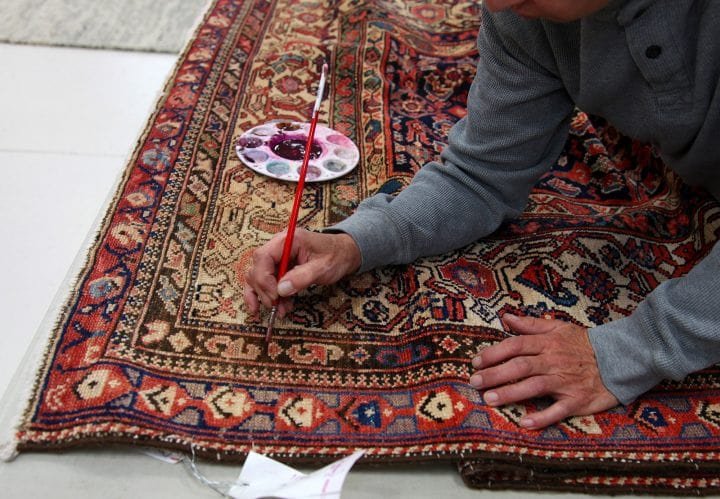
Benefits of Professional Restoration: Experts have access to proper materials, including correctly dyed yarns that match aged colors. They understand rug construction and can repair damage invisibly using traditional techniques. Professional restoration maintains or even increases rug value by preserving original construction methods. You also receive warranty coverage on the work performed.
For everyday rugs with minor damage, DIY makes sense. For anything irreplaceable, valuable, or extensively damaged, professional restoration protects your investment.
How to Prevent Future Rug Tears
Prevention is always easier and cheaper than repair.
Proper Placement: Avoid placing rugs in areas where they’ll experience excessive stress. High-traffic pathways, directly in front of frequently used doors, or under furniture that moves regularly all increase wear. If a rug must go in these locations, choose more durable constructions and rotate the rug periodically to distribute wear evenly.
Using Rug Pads: Quality rug pads provide cushioning that reduces friction between rug and floor. This cushioning absorbs some of the stress from foot traffic and furniture weight, protecting rug fibers. Pads also prevent rugs from sliding or bunching, which can stress seams and create tears. Choose pads appropriate for your floor type—some pads designed for hardwood can damage tile, and vice versa.
Avoiding Sharp Furniture Edges: Place furniture coasters or felt pads under all furniture legs that rest on rugs. These distribute weight over larger areas and prevent concentrated pressure points that can puncture rug backing. When moving furniture, always lift rather than drag. If you must slide something heavy, place cardboard or cloth under the legs to protect the rug surface.
Pet Grooming: Keep pet nails trimmed short to minimize damage from claws. Consider placing rugs made from more durable materials in areas where pets spend the most time. If you notice your pet scratching at rugs repeatedly, address the underlying behavior issue—they may be marking territory, have excess energy, or need their scratching posts relocated.
Vacuum Correctly: Use appropriate vacuum settings for your rug type. Turn off beater bars when vacuuming delicate or handmade rugs—the rotating brush can catch and pull threads. Vacuum in the direction of the pile rather than against it. Pay extra attention to edges, but be gentle—aggressive vacuuming at borders loosens binding and creates fraying.
For valuable handwoven pieces, consider professional cleaning rather than home vacuuming. Many specialty rug retailers, including Shabahang Rugs, offer cleaning services specifically designed for handmade rugs that protect fibers while thoroughly removing soil.
Frequently Asked Questions
Can I use glue to repair a rug tear?
Glue alone isn’t sufficient for most rug tears. While fabric adhesive plays a role in backing reinforcement, the tear itself needs stitching to bring torn edges together properly. Glue without stitching may hold temporarily but will eventually fail under stress. Use glue as part of a complete repair that includes stitching and backing support, not as the sole repair method. Never use rigid adhesives like super glue, which crack and can damage fibers.
How much does professional rug repair cost?
Professional repair costs vary widely based on damage type, rug size, and construction. Minor repairs like securing loose binding or stitching small tears typically range from $50 to $150. Moderate repairs including reweaving small holes or fixing damaged edges cost $150 to $500. Extensive restoration involving structural repair, large-area reweaving, or antique rug conservation can run $500 to several thousand dollars. Most repair services provide free estimates, so you’ll know costs before committing.
What is the easiest way to fix a frayed rug edge?
The simplest temporary fix for frayed edges is rug binding tape. This adhesive-backed fabric wraps around the rug edge, protecting it from further damage. Clean the edge, cut tape to length, fold it over the edge covering both front and back, and press firmly. For a more permanent solution, hand-stitch the fraying edge with matching thread using a whipstitch, then apply a thin line of fabric glue to seal. Neither method matches professional re-binding for durability, but both prevent immediate damage spread.
Can a torn Persian rug be restored?
Yes, skilled rug restorers can repair even significant damage to Persian and other handmade rugs. The restoration process involves reweaving damaged areas using traditional knotting techniques and properly dyed yarns that match the original. Complex repairs require specialists who understand Persian rug construction and can match specific regional weaving styles. While restoration is possible, it should only be performed by qualified professionals—home repair attempts on valuable Persian rugs almost always reduce their value and can cause irreversible damage.
Will repairing a rug at home reduce its value?
For ordinary rugs with no significant monetary value, home repairs don’t affect worth—these rugs have primarily functional value, and any repair that extends their useful life is beneficial. For valuable handmade rugs, visible home repairs almost always reduce value. Collectors and appraisers look for original construction and proper restoration techniques. Even structurally sound DIY repairs that are visible or use incorrect materials will lower resale value. If your rug has any significant value—typically anything over $500—use professional restoration to maintain that value.
Contact Us for Expert Rug Repair
While this guide provides methods for addressing minor tears at home, many situations call for professional expertise. At Shabahang Rugs, we understand that your rugs represent significant investment in both beauty and craftsmanship. Our specialists have decades of experience restoring handwoven rugs using traditional techniques that preserve value and integrity.
We offer comprehensive repair services for all types of rug damage, from simple edge binding to complex structural restoration. Our team works with Persian, Oriental, and other handmade rugs, using properly sourced materials and time-honored methods that respect each piece’s original construction.
Our services include:
- Professional damage assessment and repair recommendations
- Edge binding and serging restoration
- Reweaving and re-knotting using traditional techniques
- Foundation repair for structural damage
- Color matching with properly dyed yarns
- Antique rug conservation
- Complete restoration for valuable pieces
We provide free estimates on all repair work. Simply bring your rug to our location or contact us to arrange pickup for larger pieces. Our experts will examine the damage, explain your options, and provide transparent pricing before any work begins.
For rugs purchased from Shabahang Rugs, we offer ongoing care consultations to help you maintain your investment. Even if you didn’t purchase from us originally, we welcome the opportunity to help restore your handmade rug to its original beauty.
Don’t risk valuable rugs with uncertain DIY repairs. Contact us at Shabahang Rugs today for professional restoration that protects your investment and preserves craftsmanship for generations to come. Visit our showroom, call us directly, or reach out through our website to schedule a consultation.
Your rugs deserve expert care—let us provide the specialized attention that only comes from years of experience with fine handwoven textiles.