
When it comes to rug care, more isn’t always better. While keeping your rugs clean is essential for their appearance and longevity, over-cleaning rugs can cause serious damage that shortens their lifespan and diminishes their beauty. Many well-intentioned rug owners inadvertently harm their investments by cleaning too frequently or too aggressively. Understanding the balance between necessary maintenance and excessive cleaning is crucial for preserving your rugs for generations to come.
What Does Over-Cleaning Mean for Rugs?
Over-cleaning occurs when rugs undergo washing or deep cleaning more frequently than their condition warrants. This doesn’t refer to regular vacuuming, which should be done weekly or even more often in high-traffic areas. Rather, it means subjecting rugs to full washing, shampooing, or steam cleaning treatments on an unnecessarily frequent schedule.
Too frequent washing exposes rug fibers to repeated cycles of saturation, agitation and drying. Each complete cleaning cycle places mechanical stress on the fibers and when these cycles happen too often, the cumulative effect accelerates wear. A rug that should last fifty years might deteriorate in twenty if cleaned too aggressively.
Excessive scrubbing compounds the problem by creating friction between cleaning tools and delicate fibers. Even when using appropriate cleaning solutions, vigorous mechanical action wears away fiber surfaces, creating a damaged appearance that cannot be reversed. The scrubbing motion itself becomes abrasive, similar to repeatedly sanding wood.
Repeated chemical exposure from cleaning solutions can strip natural oils from wool fibers, weaken silk proteins and fade natural dyes. While professional-grade cleaning products are formulated to be gentle, their effects accumulate with each application. Fibers can only withstand a finite number of chemical exposures before showing signs of degradation.
How Over-Cleaning Damages Rugs
Fiber weakening is the most serious consequence of over-cleaning rugs. Natural fibers like wool and silk have inherent strength, but this strength diminishes with excessive washing. The mechanical action of cleaning causes individual fibers to break down at a microscopic level, reducing their tensile strength and making them more susceptible to breakage during normal use.
Color fading accelerates dramatically when rugs are cleaned too often. Each washing cycle causes minute amounts of dye to release from the fibers, a process that’s normal and expected. However, when cleanings occur too frequently, this gradual dye loss becomes noticeable much sooner. Vibrant colors become muted and the rug loses the visual depth that makes it beautiful.
Texture loss manifests as a change in how the rug feels underfoot and to the touch. Over-cleaned rugs often develop a rough, brittle quality as the natural lanolin in wool fibers is stripped away. Silk rugs lose their characteristic luster and become dull. The pile may become limp rather than springy, fundamentally changing the rug’s tactile appeal.
Foundation stress occurs when the backing material and knot structure are repeatedly saturated and dried. The expansion and contraction cycles that happen during washing place tension on the foundation threads. Over time, this can cause the backing to become brittle, knots to loosen and the structural integrity of the entire rug to deteriorate.
Rugs Most at Risk from Over-Cleaning
Wool rugs, despite their durability, are particularly vulnerable to damage from excessive cleaning. Wool fibers contain natural oils that provide protection against dirt and moisture. When these oils are repeatedly stripped away by frequent washing, the fibers become dry and prone to breakage. The rug’s natural resistance to soiling diminishes, creating a cycle where it seems to need cleaning even more often.
Silk rugs require especially careful handling due to the delicate nature of silk fibers. These luxurious rugs can lose their signature sheen with just a few too many cleanings. The protein structure of silk breaks down more readily than wool when exposed to repeated wetting, agitation and chemical treatments. Over-cleaning a silk rug can reduce its value substantially.
Handmade and antique rugs represent irreplaceable pieces of art and cultural heritage. These rugs weren’t designed with modern cleaning methods in mind and their age makes them inherently more fragile. Over-cleaning can cause dyes to run, foundations to weaken and hand-tied knots to loosen. The historical and monetary value of these pieces makes caution especially important.
Rugs with natural dyes are more susceptible to color bleeding and fading than those with synthetic dyes. Vegetable and mineral-based dyes, while beautiful and traditional, have less chemical stability than modern alternatives. Each cleaning cycle risks disturbing these delicate colorants, making proper cleaning frequency crucial for preservation.
Signs a Rug Is Being Over-Cleaned
Fuzzy or worn pile indicates that the fiber ends have been damaged by excessive mechanical action. When you run your hand across an over-cleaned rug, you’ll notice loose fibers and a fuzzy surface rather than the smooth, defined pile of a well-maintained rug. This fuzziness appears first in high-traffic areas but eventually spreads across the entire surface.
Dull or faded colors signal that dyes are being stripped from the fibers faster than normal aging would cause. Compare areas that receive different amounts of light exposure. If the entire rug looks uniformly faded rather than showing expected sun-fading patterns, over-cleaning may be the culprit. The colors lack vibrancy and appear washed out.
Stiff texture develops when natural oils are completely removed from fibers or when cleaning solution residue accumulates in the pile. An over-cleaned rug feels harsh and inflexible rather than supple. Wool rugs in particular should have a soft, slightly springy feel. If your rug feels like cardboard or straw, it’s been cleaned too aggressively.
Increased shedding beyond the normal break-in period suggests fiber damage. All new rugs shed loose fibers initially, but this should decrease significantly after the first few months. If an older rug suddenly begins shedding heavily, or if shedding never stops, the fibers may be breaking down due to over-cleaning or improper maintenance.
How Professionals Avoid Over-Cleaning
Pre-inspection and soil assessment form the foundation of responsible professional rug care. At Shabahang Rugs, our technicians carefully examine each rug to determine its actual cleaning needs rather than following a one-size-fits-all schedule. We assess the type and amount of soil present, the rug’s fiber content and construction and its overall condition before recommending any treatment.
Targeted spot treatment addresses specific stains and soiled areas without subjecting the entire rug to unnecessary cleaning. This approach recognizes that rugs rarely become uniformly dirty. By treating problem areas individually, professionals minimize the cumulative stress on the overall piece while still achieving cleanliness where it’s needed most.
Controlled cleaning solutions used in professional facilities are pH-balanced and formulated specifically for different fiber types. Professionals understand that wool requires different chemistry than silk and natural dyes need gentler treatment than synthetic ones. We adjust our cleaning formulations based on each rug’s specific characteristics, using the minimum effective concentration to achieve results.
Proper drying techniques prevent the damage that occurs when rugs remain damp for extended periods. Professional facilities use climate-controlled drying rooms that carefully regulate temperature and humidity. This prevents mildew growth, dye bleeding and foundation damage while ensuring the rug returns to its proper moisture content without over-drying.
Recommended Professional Cleaning Frequency
Low-traffic areas such as formal dining rooms or guest bedrooms typically need professional cleaning only every two to three years. These rugs accumulate minimal soil and experience little wear, so frequent cleaning provides no benefit and risks unnecessary damage. Visual inspection and odor evaluation should guide the decision rather than arbitrary schedules.
High-traffic areas including entryways, hallways and family rooms benefit from professional cleaning every twelve to eighteen months. The increased foot traffic deposits more soil and causes more wear, making periodic deep cleaning beneficial. However, even these rugs shouldn’t be cleaned more often unless specific circumstances like flooding or extensive staining occur.
Homes with pets or allergies may require slightly more frequent professional cleaning, typically annually. Pet dander, hair and occasional accidents create conditions where more regular deep cleaning supports health and hygiene. However, proper vacuuming and immediate spot treatment of accidents can often extend the time between full professional cleanings even in pet-friendly homes.
Maintenance Tips Between Professional Cleanings
Correct vacuuming methods preserve rug appearance without the risks associated with wet cleaning. Vacuum high-traffic rugs twice weekly and low-traffic pieces weekly, using appropriate settings for the pile height. Avoid beater bars on delicate or handmade rugs and always vacuum in the direction of the pile to minimize fiber stress.
Spot cleaning safely requires immediate action but gentle treatment. Blot spills immediately with clean, white absorbent cloths, working from the outside of the stain toward the center to prevent spreading. Use plain water or approved spot cleaners sparingly and never scrub aggressively. When in doubt, consult professionals rather than risk making stains worse or damaging fibers.
Rotating rugs every six months distributes wear evenly across the surface and prevents certain areas from becoming disproportionately soiled or faded. This simple practice extends the time between necessary professional cleanings by ensuring no single section deteriorates faster than others. It also helps prevent sun damage patterns that can become permanent.
Why DIY Cleaning Increases Over-Cleaning Risk
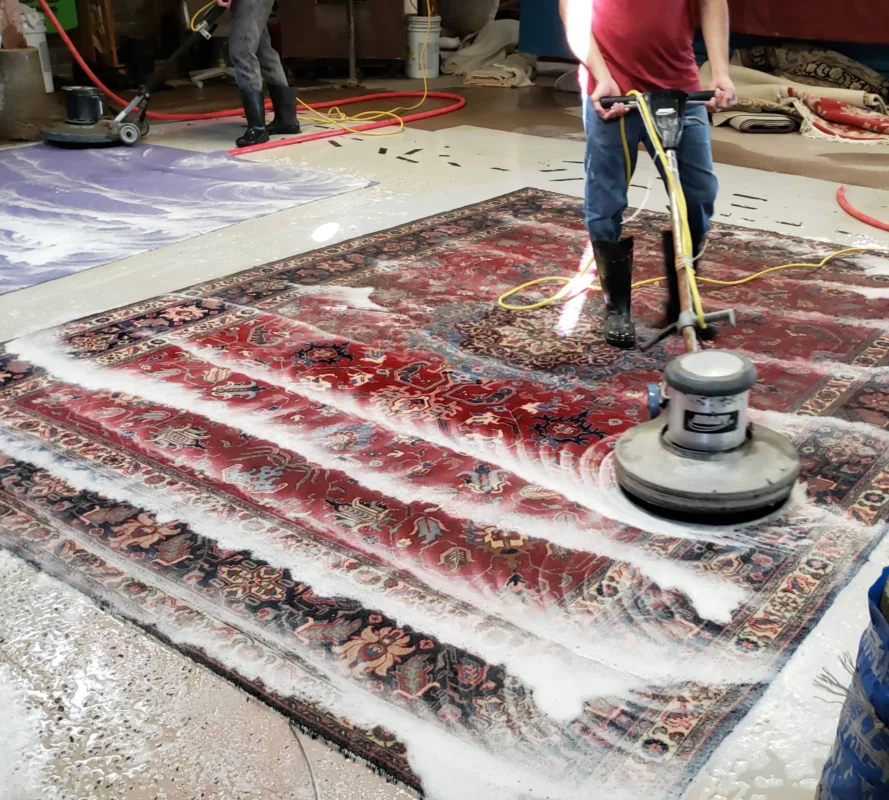
Overuse of shampoo is one of the most common mistakes homeowners make when attempting rug cleaning. The misconception that more soap means better cleaning leads to excessive suds that are impossible to rinse completely. Residual soap attracts dirt like a magnet, making the rug appear dirty again within days and prompting another round of over-cleaning.
Scrubbing stains repeatedly in frustration causes fiber damage that professional cleaners avoid through proper technique and chemistry. When a stain doesn’t respond to initial treatment, the natural impulse is to scrub harder and longer. This mechanical action breaks down fibers and can drive stains deeper into the pile, making professional restoration more difficult.
Inadequate rinsing leaves cleaning solution residue that accumulates with each DIY cleaning attempt. This buildup creates a sticky layer that attracts new soil, makes the rug feel stiff and can cause colors to appear dull. Professional facilities use high-volume water flushing systems that ensure complete removal of all cleaning agents, something home equipment cannot replicate.
Trust Professional Judgment for Optimal Rug Care
More cleaning isn’t always better—proper timing and professional judgment protect your rug’s beauty and lifespan. Rugs are investments that reward thoughtful care with decades of service and enjoyment. By resisting the temptation to clean too frequently and trusting experienced professionals to assess actual cleaning needs, you ensure your rugs remain beautiful and structurally sound for generations.
The key is understanding that cleanliness and preservation go hand in hand when approached correctly. A rug doesn’t need to look brand new after every cleaning; it needs to be appropriately maintained based on its use, construction and condition. Professional rug care specialists balance these factors to provide exactly the level of cleaning each piece requires—no more, no less.
Frequently Asked Questions
Can over-cleaning cause rugs to lose value?
Yes, over-cleaning significantly diminishes a rug’s value, especially for antique and handmade pieces. Excessive cleaning accelerates fiber wear, causes premature color fading and can damage the structural foundation. Collectors and appraisers recognize signs of over-cleaning, which reduces both the aesthetic appeal and market value of affected rugs. A well-maintained antique rug with appropriate cleaning history commands much higher prices than an over-cleaned example showing premature wear.
How do professionals know when cleaning is needed?
Professional rug specialists conduct thorough inspections that assess visible soil accumulation, fiber condition, odor presence and overall appearance. They examine the rug’s foundation, check for embedded grit and consider the traffic level it experiences. Rather than following rigid schedules, professionals make evidence-based recommendations. A rug may look dirty but not actually need full cleaning, or conversely, may harbor hidden soil that requires attention despite appearing clean on the surface.
Is steam cleaning considered over-cleaning?
Steam cleaning itself isn’t inherently over-cleaning, but it can contribute to the problem if done too frequently or with improper technique. The high heat and moisture of steam cleaning place stress on fibers and dyes. When performed more than once yearly without genuine need, or when applied to delicate rugs that require gentler methods, steam cleaning becomes excessive. Professional rug cleaning facilities often use alternative methods specifically to avoid the potential damage associated with repeated steam cleaning.
Can rug protection treatments reduce cleaning frequency?
Yes, quality fiber protection treatments create a barrier that helps rugs resist soiling and makes spills easier to clean. When professionally applied after cleaning, these treatments can extend the time between necessary deep cleanings by six months to a year. However, protection treatments aren’t permanent and wear away with foot traffic and vacuuming. They work best as part of a comprehensive maintenance plan rather than as a substitute for appropriate cleaning when actually needed.
Should antique rugs be cleaned less often?
Antique rugs generally require less frequent cleaning than contemporary pieces, both because they often see lighter use and because their age makes them more fragile. Most antique rugs benefit from professional cleaning only every three to five years unless specific incidents like spills or flooding occur. The exception is heavily soiled antique rugs, where embedded grit causes ongoing damage that outweighs the risks of careful professional cleaning. Expert assessment is crucial for determining the right balance.
Contact Shabahang Rugs for Expert Rug Care Guidance
At Shabahang Rugs, we understand that every rug has unique care requirements based on its fiber content, construction, age and use pattern. Our certified technicians assess each piece individually to determine the appropriate cleaning frequency and methods. We never recommend unnecessary services and we educate our clients on proper maintenance practices that minimize the need for frequent professional intervention.
Contact us at Shabahang Rugs today to schedule a consultation and learn how proper care timing can extend your rug’s life while maintaining its beauty.
Call now: (847) 256-5205
Address: 3207 Lake Avenue, Wilmette, IL 60091
Request a free Quote: Shabahang Rugs