
Oriental and Persian rugs represent centuries of craftsmanship, cultural heritage, and artistic expression. These handwoven treasures require specialized care that respects their delicate construction, natural materials, and historical significance. Understanding the professional Oriental & Persian rug cleaning process reveals why these magnificent pieces demand expertise far beyond standard carpet cleaning methods.
Why Oriental & Persian Rugs Need Specialized Cleaning
The distinction between Oriental rugs and machine-made carpets extends far beyond aesthetics. Every aspect of their construction demands careful, knowledgeable handling.
Handmade construction: Each knot in an Oriental or Persian rug was tied individually by skilled artisans, creating complex patterns and textures that machine manufacturing cannot replicate. This intricate hand-knotted structure responds differently to cleaning than machine-tufted carpets, requiring gentler techniques that preserve the integrity of each thread.
Natural dyes and fibers: Traditional Persian rugs use natural dyes derived from plants, minerals, and insects. These organic colorants are more sensitive to pH changes, heat, and harsh chemicals than synthetic dyes. Similarly, the wool, silk, and cotton fibers require specific care to maintain their natural luster and strength.
High value and cultural significance: Beyond their monetary worth, these rugs often carry deep cultural and familial meaning. Many are heirloom pieces passed through generations, making preservation not just a matter of aesthetics but of honoring heritage and history.
Differences from wall-to-wall carpet: Unlike permanently installed carpeting, Oriental rugs have distinct foundations, backing structures, and finishing details like hand-knotted fringes. These elements cannot withstand the aggressive extraction methods used in typical carpet cleaning, which can cause irreparable damage to the rug’s structure.
What Makes Professional Rug Cleaning Different
Before any water touches an Oriental or Persian rug, knowledgeable professionals conduct thorough assessments that inform every subsequent step of the cleaning process.
Fiber identification: Experts examine the rug to determine whether it contains wool, silk, cotton, or a combination of these materials. Each fiber type has unique characteristics and vulnerabilities that dictate appropriate cleaning methods, water temperature, and drying requirements.
Dye testing before washing: Professional cleaners perform colorfastness tests on multiple areas of the rug, checking how dyes react to moisture and cleaning solutions. This critical step identifies potential bleeding risks and allows technicians to adjust their approach accordingly.
Structural inspection: A detailed examination reveals areas of wear, previous repairs, weak spots, and potential problems that cleaning might exacerbate. This assessment helps cleaners avoid causing additional damage to already compromised areas.
Custom cleaning plan: Based on these findings, professionals develop a tailored approach for each individual rug. There is no one-size-fits-all method for cleaning Oriental rugs—each piece receives treatment appropriate to its specific needs and condition.
Step-by-Step Professional Cleaning Process
1. Pre-Inspection & Dye Stability Testing
The cleaning journey begins with comprehensive evaluation. Technicians document the rug’s condition through detailed notes and photographs, establishing a baseline for comparison after cleaning.
During dye stability testing, small amounts of cleaning solution are applied to inconspicuous areas of the rug. Specialists observe how colors respond, identifying any dyes that might bleed or fade. This information allows them to use color stabilizers or modify their approach to protect vulnerable hues.
Experts also check for structural issues like loose threads, damaged foundations, or areas requiring repair before washing. Cleaning a rug with existing damage can worsen these problems, so addressing them beforehand ensures the best outcome.
2. Dry Dust Removal
This crucial first step often surprises rug owners by revealing just how much hidden contamination their rugs contain. Even well-vacuumed rugs harbor pounds of dry soil, dust, and particulates deep within their pile and foundation.
Professional facilities use specialized dusting equipment that suspends rugs and vibrates or beats them systematically, releasing embedded dirt that home vacuuming cannot reach. This process removes abrasive particles that would otherwise act like sandpaper during washing, gradually wearing away delicate fibers.
The amount of dust removed during this stage can be astonishing—it’s not uncommon for a single Oriental rug to release several pounds of dry soil. This deep cleaning prepares the rug for effective wet washing by eliminating the bulk of contamination first.
3. Pre-Treatment of Stains & Odors
Once dry soil is removed, technicians address specific problem areas with targeted treatments. Different types of stains require different solutions, and professionals select products based on the stain’s composition and the rug’s fiber content.
Pet urine receives enzymatic treatments that break down uric acid crystals at the molecular level. These specialized cleaners neutralize odors rather than masking them, ensuring complete decontamination.
Organic stains from food, beverages, or bodily fluids are treated with gentle, fiber-safe solutions that lift stains without setting them deeper into the pile.
Safe enzyme or neutral pH treatments are preferred because they work effectively without risking color damage or fiber degradation. Harsh chemicals that might work on synthetic carpets can destroy natural dyes and weaken wool fibers in Oriental rugs.
4. Full Immersion Washing
The heart of professional Persian rug cleaning is the full immersion wash—a process fundamentally different from surface cleaning or steam cleaning methods.
Rugs are submerged in specially formulated cleaning solutions within large washing pits or basins. Controlled water temperature ensures effective cleaning without shocking delicate fibers or destabilizing sensitive dyes. Water that’s too hot can cause shrinkage and color bleeding, while water that’s too cold won’t adequately release soils.
pH-balanced solutions are carefully selected to be compatible with natural fibers and dyes. These professional-grade detergents clean thoroughly without leaving residues that attract future dirt or create stiffness in the pile.
Gentle hand washing or machine-assisted washing provides the agitation needed to release embedded soils without damaging the rug’s construction. Shabahang Rugs employs techniques that respect the handmade nature of each piece, using soft brushes and controlled mechanical action that mimics traditional hand-washing methods while ensuring consistent, thorough results.
5. Thorough Rinsing
Perhaps the most critical yet often overlooked step in the cleaning process is comprehensive rinsing. Incomplete rinsing leaves cleaning solution residues that cause multiple problems: they attract dirt, create stiff or crunchy texture, and can eventually discolor fibers.
Professional facilities use copious amounts of clean water to flush all traces of cleaning solutions from the rug. This process continues until the rinse water runs completely clear, indicating that no soap or contaminants remain in the pile or foundation.
Proper rinsing prevents the rapid re-soiling that often occurs with DIY or inadequate professional cleaning, where residues act like magnets for new dirt.
6. Controlled Drying
How a rug dries is just as important as how it’s washed. Improper drying can undo all the benefits of expert cleaning and create new problems.
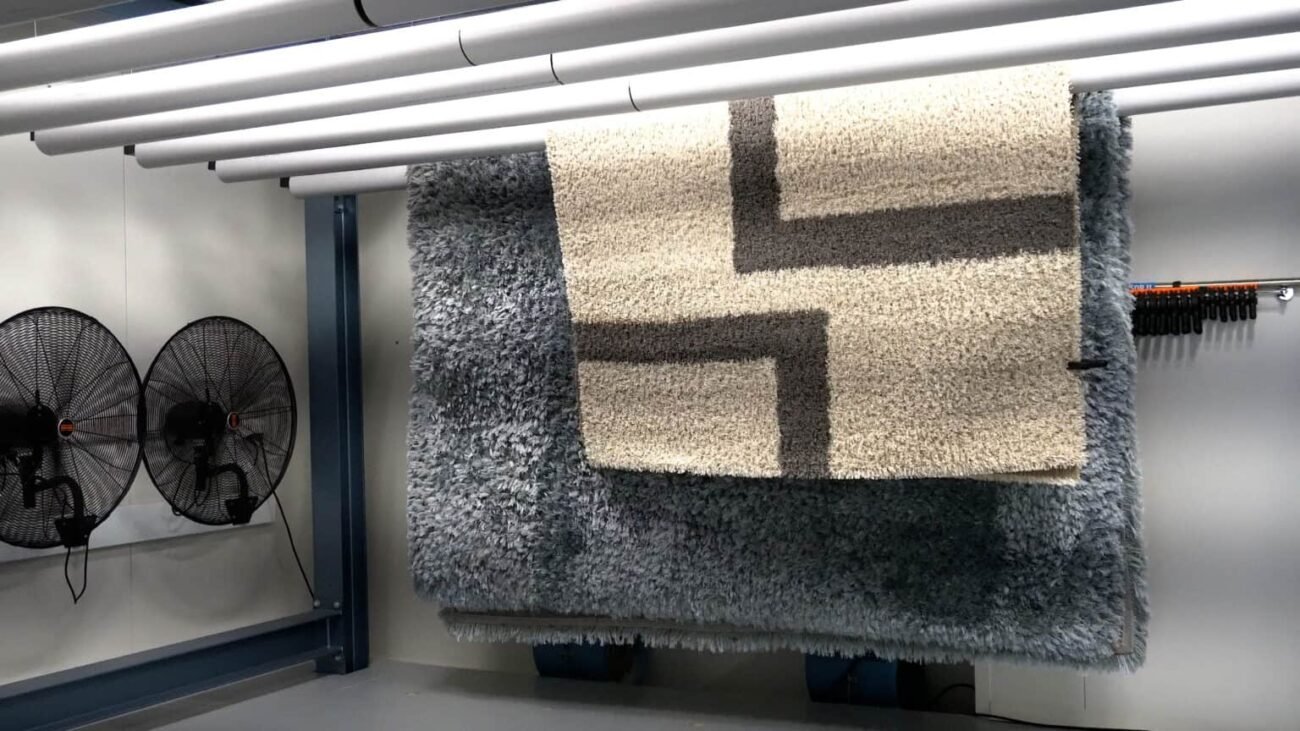
Climate-controlled drying rooms maintain optimal temperature and humidity levels while providing excellent air circulation. This environment allows rugs to dry completely and evenly, typically within 24-48 hours.
The controlled conditions prevent mold and mildew growth, which can develop in rugs that remain damp for extended periods. They also prevent color migration, where dyes from one area of the rug bleed into adjacent areas during slow drying.
Professional drying methods ensure that rugs dry flat and maintain their proper shape, preventing the warping or buckling that can occur when rugs dry unevenly or too slowly.
7. Final Grooming & Inspection
Before a rug returns to its owner, technicians perform final quality checks and grooming procedures.
Pile setting involves brushing the rug’s pile in the direction of the nap, restoring its natural lay and luster. This step enhances the rug’s appearance and ensures even pile height throughout.
Fringe grooming addresses the hand-knotted fringes that are actually extensions of the rug’s foundation. These delicate elements receive gentle cleaning and combing to restore their white, crisp appearance without causing damage.
A comprehensive quality check verifies that all stains have been addressed, odors eliminated, and the rug restored to optimal condition. Only after passing this inspection is the rug carefully packaged for return to its owner.
Why Steam Cleaning Is Not Safe for Persian Rugs
Many homeowners mistakenly believe that steam cleaning—effective for wall-to-wall carpeting—is suitable for Oriental and Persian rugs. This assumption can lead to devastating and irreversible damage.
Excessive heat: Steam cleaning uses high temperatures that can shock natural fibers and destabilize organic dyes. The intense heat can cause wool to shrink, silk to lose its sheen, and natural dyes to bleed or fade.
Over-wetting: Steam cleaning saturates rugs with moisture that penetrates deep into the foundation and backing. This excessive wetness is difficult to extract completely, especially in thick, densely knotted rugs, leading to prolonged dampness.
Fiber shrinkage: The combination of heat and moisture causes natural fibers to contract. This shrinkage can distort the rug’s shape, create puckering or buckling, and cause the rug to no longer lie flat.
Dye bleeding risks: Steam cleaning’s heat and moisture combination creates ideal conditions for dye migration. Colors can run together, creating muddy or stained appearances that cannot be reversed.
How Professionals Protect Rug Colors & Fibers
Preserving the vibrant colors and supple texture of Oriental rugs requires specialized knowledge and careful technique throughout the cleaning process.
Color stabilizers: When dye testing reveals unstable colors, professionals apply stabilizing treatments that help prevent bleeding during washing. These products temporarily lock dyes in place without altering the rug’s appearance or feel.
Low-agitation washing: Unlike aggressive scrubbing that can abrade fibers and fade colors, professional cleaning uses controlled, gentle agitation. This approach effectively removes soils while respecting the delicate nature of handmade construction.
Custom detergents: Specialists select cleaning solutions specifically formulated for natural fibers and organic dyes. These pH-balanced products clean effectively without the harsh alkalinity or acidity that damages wool and destabilizes colors.
Fiber-safe brushing: Professional technicians use soft brushes appropriate for the specific fiber type, applying just enough pressure to release embedded soils without roughening or breaking individual threads.
Odor & Pet Urine Removal in Oriental Rugs
Pet accidents present particular challenges in Oriental rugs because of their absorbent natural fibers and dense construction.
Why odors penetrate the foundation: Urine doesn’t stay on the surface of wool rugs—it wicks down through the pile into the cotton foundation and even the backing. Surface treatments cannot reach these deep layers where odor-causing crystals form.
Complete decontamination process: Professional cleaning addresses urine contamination at every level. The full immersion washing process flushes urine crystals from the entire structure, while enzymatic pre-treatments break down the compounds that cause persistent odors.
When pad replacement is necessary: If a rug has sat on contaminated padding for an extended period, that padding may have absorbed so much urine that cleaning is insufficient. In these cases, Shabahang Rugs recommends pad replacement to ensure complete odor elimination.
How Often Should Oriental & Persian Rugs Be Cleaned?
The appropriate cleaning frequency depends on several factors related to the rug’s use and environment.
Average homes: In typical residential settings without pets or young children, Oriental and Persian rugs benefit from professional cleaning every 2–3 years. This interval prevents soil accumulation from becoming problematic while avoiding unnecessary handling of these delicate pieces.
Homes with pets or children: Increased exposure to spills, accidents, and tracked-in dirt necessitates more frequent cleaning. In these environments, professional cleaning every 12–18 months helps maintain the rug’s appearance and prevents permanent staining or odor issues.
Antique rugs: Very old or fragile rugs require assessment-based scheduling rather than fixed intervals. Professionals evaluate the rug’s condition and recommend cleaning only when necessary to balance cleanliness with minimizing handling of delicate fibers.
Regular professional cleaning actually extends a rug’s lifespan by removing abrasive soils before they can wear away fibers. Waiting too long between cleanings allows accumulated dirt to cause permanent damage.
DIY Cleaning vs. Professional Cleaning
The temptation to clean Oriental rugs at home is understandable, but the risks far outweigh potential savings.
Risks of home methods: DIY cleaning approaches lack the crucial steps that protect delicate rugs—pre-cleaning dye testing, proper dust removal, pH-balanced solutions, and controlled drying. Without these safeguards, home cleaning attempts can cause color bleeding, fiber damage, and structural distortion.
Long-term damage potential: A single improper cleaning can permanently diminish or destroy an Oriental rug’s value. Color bleeding cannot be reversed, shrunken wool cannot be stretched back to size, and weakened fibers cannot be restored.
Cost of improper cleaning vs proper care: While professional cleaning represents an investment, it pales in comparison to the cost of replacing a damaged rug or attempting restoration after DIY cleaning goes wrong. Prevention through proper care is always more economical than repair.
When Professional Cleaning Is Urgent
Certain situations demand immediate professional attention to prevent permanent damage or health hazards.
Water damage: Whether from flooding, pipe bursts, or major spills, water-saturated rugs require emergency professional drying within 24-48 hours to prevent mold growth and color bleeding.
Mold or mildew: Visible mold or musty odors indicate contamination that poses health risks and threatens the rug’s structural integrity. Professional treatment can often save moldy rugs if addressed promptly.
Urine contamination: Fresh pet accidents should be cleaned professionally as soon as possible. The longer urine remains in the rug, the more damage it causes and the more difficult complete odor removal becomes.
Heavy discoloration: When rugs appear noticeably darker or dingy compared to their original appearance, soil accumulation has reached levels that may be causing fiber damage. Professional cleaning restores the rug’s true colors while removing damaging abrasives.
Antique or heirloom rugs: These irreplaceable pieces should never be subjected to DIY cleaning attempts. Their age, fragility, and value demand professional expertise to clean safely without compromising their integrity or worth.
Final Thoughts
Professional cleaning of Oriental and Persian rugs is not simply about removing dirt—it’s about preserving cultural artifacts, protecting substantial investments, and maintaining the beauty of handcrafted art. The specialized process honors the traditional techniques used to create these rugs while employing modern knowledge and equipment to clean them safely and thoroughly.
From pre-inspection through final grooming, every step of professional rug cleaning protects the unique characteristics that make Oriental and Persian rugs so valuable. The combination of expert knowledge, appropriate equipment, and time-tested techniques ensures these magnificent pieces continue to grace homes for generations to come.
Frequently Asked Questions
Can professional cleaning fix color bleeding?
If color bleeding has already occurred, it typically cannot be completely reversed. However, professional cleaners can sometimes minimize the appearance through specialized treatments. The key is prevention—proper dye testing before washing identifies bleeding risks so appropriate measures can be taken to protect colors during cleaning.
How long does professional rug cleaning take?
The complete professional cleaning process typically takes 2-4 weeks from pickup to delivery. This timeframe includes inspection, cleaning, controlled drying, and final grooming. While this may seem lengthy, the careful, unhurried approach ensures optimal results and complete drying, which is essential for preventing mold and preserving the rug.
Is hand washing better than machine washing for Persian rugs?
Both methods can be appropriate when performed correctly by professionals. Hand washing offers maximum control and gentleness for extremely delicate or antique pieces. Modern machine-assisted washing, when done properly with appropriate equipment and expertise, can be equally safe while ensuring more consistent results. The best approach depends on the specific rug’s condition, age, and fiber content.
Can antique rugs be safely cleaned?
Yes, antique rugs can and should be cleaned professionally, though they require extra care and expertise. Professional cleaners assess each antique rug individually to determine the safest cleaning approach. Some very fragile pieces may require modified techniques or more frequent gentle cleanings rather than intensive deep cleaning. Proper professional care actually helps preserve antique rugs by removing damaging abrasive soils.
Will professional cleaning make my rug look new again?
Professional cleaning can dramatically revitalize a rug’s appearance by removing years of accumulated soil and restoring true colors. However, it cannot reverse wear patterns, fiber loss, or fading caused by sun exposure. What cleaning can do is reveal the rug’s best possible condition by eliminating the dulling effects of dirt, bringing back vibrancy and clarity to the design while ensuring the rug’s longevity.
Trust Shabahang Rugs with Your Oriental & Persian Rug Cleaning
At Shabahang Rugs, we understand that your Oriental or Persian rug represents more than a floor covering—it’s an investment in beauty, craftsmanship, and heritage. Our professional cleaning process combines traditional hand-washing techniques with modern climate-controlled facilities to deliver exceptional results while safeguarding your rug’s integrity.
Our team of specialists has extensive experience cleaning antique, handmade, and heirloom rugs of all types. We perform thorough dye testing, gentle immersion washing, and careful drying to ensure your rug returns to you looking its absolute best—with colors revitalized, fibers refreshed, and no damage from harsh chemicals or improper techniques.
Whether your Persian rug requires routine maintenance cleaning or needs restoration after water damage or pet accidents, Shabahang Rugs provides the expert care your valuable piece deserves. Contact us today to schedule a consultation and experience the difference that true professional rug cleaning expertise makes.