
Many homeowners make the costly mistake of treating their valuable handmade rugs like wall-to-wall carpeting, subjecting them to cleaning methods that can cause irreversible damage. While carpet cleaning and Handmade Rug Cleaning might seem similar on the surface, they’re fundamentally different processes that require distinct expertise, equipment, and techniques. At Shabahang Rugs, we’ve witnessed the devastating results when carpet cleaners attempt to service handmade Oriental, Persian, and artisan rugs using methods designed for synthetic carpeting. Understanding these critical differences can help you protect your investment and preserve your rug’s beauty for generations.
Handmade Rugs vs Carpets – Key Structural Differences
The most fundamental distinction between handmade rugs and carpets lies in their construction. Handmade rugs are created through painstaking knot-by-knot construction, where individual strands of yarn are tied by hand onto a foundation. Each knot represents a deliberate artistic choice, with skilled weavers creating intricate patterns one tiny section at a time. This process can take months or even years for a single rug, depending on its size and complexity.
Carpets, by contrast, are manufactured on industrial machines that can produce dozens of square yards per hour. They’re typically tufted, with yarns punched through a backing material and secured with adhesive latex. This attached backing creates a permanently bonded structure that’s fundamentally different from a rug’s woven foundation.
Natural fibers form the backbone of quality handmade rugs. Wool, silk, and cotton are chosen for their durability, beauty, and ability to accept natural dyes. These organic materials respond to moisture, temperature, and cleaning solutions in ways that synthetic carpet fibers simply don’t. They require gentler handling and specific pH-balanced treatments to avoid damage.
The open foundation structure of handmade rugs means that dirt, dust, and debris don’t just sit on the surface—they fall through the pile and accumulate within the foundation itself. This characteristic demands thorough dust removal before any wet cleaning begins, a step that carpet cleaning completely ignores.
Perhaps most importantly, the fringe on handmade rugs isn’t decorative—it’s the actual warp threads that form the structural foundation of the rug. These threads run the entire length of the piece, and damaging them compromises the rug’s structural integrity. Carpet fringe, when it exists at all, is purely ornamental and sewn on after manufacturing.
Why Carpet Cleaning Methods Are Unsafe for Handmade Rugs
Carpet cleaning companies use methods optimized for synthetic, wall-to-wall installations that are fundamentally incompatible with handmade rugs. The excessive heat generated by truck-mounted steam cleaning systems can cause natural dyes to bleed, wool fibers to felt and shrink, and delicate silk to deteriorate. While synthetic carpet fibers tolerate high temperatures, natural fibers are far more vulnerable.
High moisture extraction through powerful vacuum systems poses another serious threat. Carpet cleaning machines are designed to extract as much water as possible from carpeting that remains installed on the floor. When applied to rugs, this aggressive suction can distort the foundation, stretch the piece out of shape, and damage the structural integrity that hand-knotting provides.
Aggressive brushing and agitation work acceptably on tufted carpet pile that’s secured with latex backing, but these same techniques can literally tear knots loose from handmade rugs. The rotating brushes on carpet cleaning machines apply force that handmade construction was never designed to withstand, potentially pulling yarns free and creating bare spots.
Chemical residue risks multiply with handmade rugs because their natural fibers absorb and retain cleaning solutions more readily than synthetic carpets. Carpet cleaning chemicals often have high pH levels that can strip natural dyes, weaken wool fibers, and leave residues that attract dirt. These harsh formulations work adequately on synthetic materials but prove destructive to natural fibers and traditional dyes.
Materials Used in Handmade Rugs
Understanding the materials in handmade rugs explains why they need specialized care. Wool serves as the primary pile material in most handmade rugs due to its natural resilience, softness, and excellent dye absorption. However, wool is also hygroscopic, meaning it readily absorbs moisture from the environment. This characteristic makes it vulnerable to over-wetting, which can cause shrinkage, felting, and distortion that carpet fibers don’t experience.
Silk appears in the finest Persian and Oriental rugs, prized for its lustrous sheen and ability to showcase intricate details. This luxurious fiber is also extraordinarily delicate, requiring cold water, minimal agitation, and expert handling. Silk rugs cleaned with carpet cleaning methods often suffer permanent damage, losing their characteristic sheen and developing water spots that can never be removed.
Cotton foundations provide the warp and weft structure onto which wool or silk pile is knotted. While cotton is relatively durable, it’s highly absorbent and takes considerable time to dry properly. Carpet cleaning’s quick-dry approach leaves cotton foundations damp, creating ideal conditions for mold, mildew, and dry rot that can destroy a rug from the inside out.
Natural dyes created from plants, minerals, and insects produce the rich, complex colors that make handmade rugs so captivating. These traditional dyes weren’t formulated to withstand modern chemical cleaning solutions or high heat. At Shabahang Rugs, we understand that preserving these natural colors requires pH-neutral solutions, temperature control, and pre-cleaning dye testing—precautions carpet cleaners simply don’t take.
The Professional Handmade Rug Cleaning Process
Proper handmade rug cleaning follows a systematic process that bears little resemblance to carpet cleaning. Pre-inspection begins the journey, with specialists examining every aspect of the rug’s condition. They document existing damage, identify fiber content, note areas of concern, and assess the rug’s overall structural integrity before any cleaning begins.
Dye testing follows inspection, as we discussed in our colorfastness article. This critical step determines which colors are stable and which might bleed during washing, allowing specialists to modify their approach accordingly. Carpet cleaners skip this step entirely, often with disastrous results.
Dust removal happens before any moisture touches the rug. Professional rug cleaning facilities use specialized dusting equipment that vibrates rugs while applying controlled vacuum suction to extract the pounds of dry soil embedded in the foundation. This process removes 70-90% of the dirt from a rug before wet cleaning even begins. Carpet cleaning starts with moisture immediately, turning dry soil into mud that’s then ground deeper into the fibers.
Controlled washing takes place in dedicated wash pits or on groomed wash floors where rugs can be fully immersed or carefully treated by hand. Water temperature, solution pH, and agitation are all precisely controlled based on each rug’s specific needs. The rug is thoroughly rinsed to remove all cleaning solution residue, something truck-mounted carpet cleaning systems cannot achieve.
Proper drying in climate-controlled facilities ensures rugs dry flat, in the correct shape, with adequate airflow on both sides. This process takes one to three weeks, depending on the rug’s size, thickness, and fiber content. Rushing the drying process, as carpet cleaning necessarily does, invites mold growth, foundation distortion, and color bleeding.
Color Bleeding & Shrinkage Risks
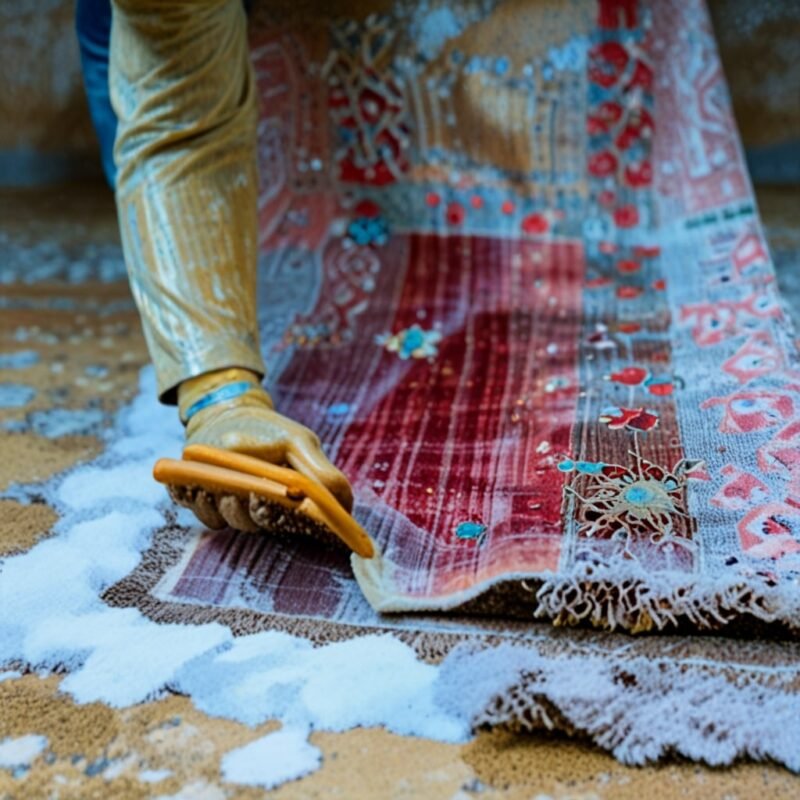
Natural dye migration represents one of the most catastrophic failures that occur when carpet cleaning methods meet handmade rugs. The combination of heat, aggressive chemicals, and insufficient testing causes unstable dyes to release from their fibers and migrate into adjacent lighter-colored areas. A beautiful Persian rug with crisp ivory and deep red sections becomes a muddy pink disaster when red dye bleeds throughout.
Improper temperature use accelerates these problems. Hot water, which carpet cleaners use routinely, causes wool fibers to swell, felt, and shrink. A rug that measured 9×12 feet before cleaning might emerge as 8×11 feet, with a stiff, matted texture replacing its original soft pile. This damage is permanent and irreversible.
Foundation distortion occurs when excessive moisture saturates cotton warp and weft threads, then aggressive extraction pulls the rug while these threads are at their weakest. The result is a rug that won’t lie flat, with waves, ripples, and buckles that no amount of stretching or blocking can completely correct.
Fringe & Edge Care – Not Just Decoration
The fringe on handmade rugs demands special attention because of its structural importance. These aren’t decorative tassels that can be roughly handled—they’re the actual warp threads that form the foundation of the entire rug. Damage to fringe compromises the structural integrity of the rug itself, potentially allowing it to unravel from the ends.
Hand-cleaning techniques are essential for fringe care. Professionals gently clean fringe using soft brushes and appropriate solutions, checking carefully for dry rot, previous damage, and weakness that might worsen during cleaning. At Shabahang Rugs, we sometimes recommend protective treatments or gentle repairs to strengthen fragile fringe before cleaning begins.
Damage caused by carpet machines is swift and severe. The rotating brushes and high suction of carpet cleaning equipment can catch fringe, tangling and tearing these delicate threads. We’ve seen rugs where inches of fringe were ripped away by carpet cleaning machines, damage that costs hundreds or thousands of dollars to repair through painstaking hand-knotting of replacement fringe.
Value & Longevity Considerations
Treating handmade rugs as investments rather than simple floor coverings changes how you approach their care. A quality handmade rug can last 100 years or more with proper maintenance, potentially increasing in value over time. Antique Persian and Oriental rugs often appreciate, becoming family heirlooms passed down through generations.
The cost of improper cleaning extends far beyond the immediate service fee. When carpet cleaning damages a handmade rug, you face the choice between expensive restoration or complete loss of your investment. Color bleeding, shrinkage, and structural damage often cannot be fully corrected, even by skilled restoration specialists. The $200 you saved by using a carpet cleaner instead of a rug specialist can cost you thousands in diminished rug value or replacement costs.
Preservation vs replacement economics strongly favor professional rug care. Spending $300-600 every few years for proper cleaning protects a $5,000-50,000 investment. Compare this to replacing a damaged rug, and the value of specialized care becomes obvious. At Shabahang Rugs, we view our cleaning services not as an expense but as insurance that protects your significant investment.
When Carpet Cleaning Is Acceptable
Not every rug requires specialized professional care. Machine-made rugs with synthetic fibers can generally tolerate carpet cleaning methods safely. These modern rugs are manufactured specifically to withstand the heat, moisture, and agitation that carpet cleaning equipment delivers.
Synthetic fibers like polypropylene, polyester, and nylon are heat-stable, color-fast, and resilient to harsh chemicals. A machine-made rug from a home goods store, with latex backing and synthetic pile, shares more in common with wall-to-wall carpeting than with a handmade wool Persian rug. For these pieces, carpet cleaning represents an acceptable, cost-effective option.
However, clear limitations exist even here. The edges and backing of machine-made rugs can still suffer damage from carpet cleaning equipment, and the results rarely match the thorough cleaning that removal and full immersion washing provide. If your machine-made rug has significant value, even as a synthetic piece, dedicated rug cleaning still offers superior results.
How to Choose the Right Professional for Handmade Rugs
Selecting a rug cleaning specialist requires looking for specific qualifications that carpet cleaners simply don’t possess. A dedicated rug wash facility stands as the most important indicator. Professionals who remove rugs to a specialized cleaning facility can provide thorough dusting, controlled washing, and proper drying that’s impossible to achieve in your home with portable equipment.
Experience with handmade rugs should be demonstrable, not just claimed. Ask potential cleaners about their familiarity with Persian rugs, Oriental rugs, wool versus silk care, and natural dye challenges. Request references from clients with similar rugs, and don’t hesitate to ask detailed questions about their process.
Transparent process descriptions separate knowledgeable specialists from general carpet cleaners expanding their services. Reputable rug cleaners readily explain their dusting methods, washing techniques, drying facilities, and quality control procedures. They should discuss pre-inspection, dye testing, and how they customize their approach for different rug types.
Specialized equipment tells you immediately whether you’re dealing with a true rug specialist. Look for dedicated dust removal systems, wash pits or groomed wash floors, climate-controlled drying rooms, and finishing equipment. A carpet cleaner with a truck-mounted steam cleaning system doesn’t have the tools necessary for proper handmade rug care, regardless of their claims.
Why Shabahang Rugs Is Your Trusted Partner in Rug Care
Handmade rugs embody centuries of artistic tradition, skilled craftsmanship, and cultural heritage. These pieces require specialized care that respects their construction, materials, and value—care that carpet cleaning simply cannot provide. The structural differences, material characteristics, and investment value of handmade rugs demand expertise that takes years to develop.
Understanding these distinctions helps you make informed decisions about your rug’s care. When you recognize that proper handmade rug cleaning protects craftsmanship, preserves beauty, and maintains long-term value, the choice between specialized rug care and general carpet cleaning becomes obvious.
Your handmade rugs deserve more than carpet cleaning—they deserve professionals who understand and respect their unique requirements. Proper methods protect your investment, honor the artisans who created these masterpieces, and ensure your rugs remain beautiful for generations to come.
Frequently Asked Questions
Can handmade rugs be cleaned like carpet?
No, handmade rugs should never be cleaned using standard carpet cleaning methods. The fundamental differences in construction, materials, and backing mean that techniques safe for synthetic carpeting can cause severe damage to handmade rugs. Carpet cleaning’s high heat can cause natural dyes to bleed and wool to shrink, aggressive brushing can tear hand-tied knots loose, and quick-drying approaches leave natural fibers damp enough to develop mold. Handmade rugs require specialized cleaning in a dedicated facility where they can be properly dusted, gently washed, and thoroughly dried.
Why do handmade rugs need special care?
Handmade rugs need special care because of their unique construction and natural materials. Unlike machine-made carpets with latex backing and synthetic fibers, handmade rugs feature hand-knotted construction with natural wool, silk, and cotton fibers. These materials are more delicate, absorbent, and reactive to heat and chemicals than synthetic alternatives. Traditional natural dyes can bleed if not tested and treated properly. The structural fringe is an integral part of the rug, not a decoration, and requires gentle handling. Additionally, handmade rugs represent significant financial and artistic investments that proper care protects and preserves.
What happens if a carpet cleaner cleans a rug?
When carpet cleaners treat handmade rugs using standard carpet cleaning methods, several types of damage commonly occur. Color bleeding from natural dyes exposed to heat and harsh chemicals can permanently stain lighter areas. Shrinkage and felting of wool fibers result from hot water and aggressive agitation. Foundation distortion happens when excessive moisture and extraction force pull the rug out of shape. Fringe damage occurs when rotating brushes catch and tear the structural threads. Mold and mildew develop when rugs don’t dry properly. Chemical residues remain embedded in natural fibers, attracting dirt and dulling colors. These damages often cannot be fully corrected, even with professional restoration.
Are handmade rugs more delicate than carpet?
Yes, handmade rugs are significantly more delicate than wall-to-wall carpeting, though this doesn’t mean they’re fragile with proper care. Their natural fibers react more sensitively to moisture, heat, and chemicals than synthetic carpet materials. The hand-knotted construction, while incredibly durable under normal use, cannot withstand the aggressive brushing and extraction that carpet cleaning equipment applies. Natural dyes are more susceptible to bleeding than synthetic carpet dyes. However, when cared for properly, handmade rugs are remarkably durable and can last 100+ years, far outlasting any carpet. Their “delicacy” relates to cleaning requirements, not to their fundamental durability under foot traffic.
How often should handmade rugs be cleaned?
The frequency of professional cleaning for handmade rugs depends on several factors, including foot traffic, placement, household conditions, and whether you have pets or children. As a general guideline, handmade rugs in moderate-traffic areas should be professionally cleaned every 3-5 years. High-traffic rugs in entryways or heavily used rooms may need cleaning every 1-2 years. Low-traffic rugs in formal areas might only require cleaning every 5-7 years. Between professional cleanings, regular vacuuming (without beater bars on handmade rugs) and prompt attention to spills help maintain your rug. At Shabahang Rugs, we assess each rug individually during inspection and provide personalized recommendations based on its specific condition and use.
Can steam cleaning damage handmade rugs?
Yes, steam cleaning is one of the most damaging methods that can be applied to handmade rugs. The high temperatures generated by steam cleaning systems—often 200°F or higher—can cause catastrophic damage to natural fibers and dyes. Hot steam causes wool to felt and shrink, silk to lose its luster and structural integrity, and natural dyes to bleed and run. The heat also accelerates chemical reactions with cleaning solutions, increasing the risk of fiber damage and color alteration. Additionally, steam cleaning equipment cannot provide the thorough rinsing that handmade rugs require to remove all cleaning solution residue. The only safe way to clean valuable handmade rugs is through controlled washing with appropriate temperature water in a specialized facility.
Why does handmade rug cleaning cost more?
Handmade rug cleaning costs more than carpet cleaning because it’s a completely different, far more labor-intensive process. Professional rug cleaning requires specialized facilities with dust removal systems, wash pits, and climate-controlled drying rooms that represent significant investment. The process takes weeks rather than hours, with individual attention at every stage. Pre-inspection, dye testing, careful hand-finishing, and quality control all add labor costs that carpet cleaning doesn’t incur. The expertise required takes years to develop—specialists must understand different fiber types, construction methods, dye characteristics, and proper treatment for each combination. Additionally, the insurance and liability for handling valuable rugs that may be worth thousands of dollars necessitates higher pricing. The investment protects your much more valuable rug and ensures it lasts for generations.
How long does professional handmade rug cleaning take?
Professional handmade rug cleaning typically takes 2-4 weeks from pickup to delivery, though complex or delicate pieces may require longer. This timeline includes initial inspection and dye testing (1-2 days), thorough dusting (performed carefully to protect the rug), controlled washing (adjusted for each rug’s specific needs), and most importantly, proper drying (1-3 weeks depending on rug thickness, size, and fiber content). Rushing this process risks mold growth, foundation distortion, and color bleeding. Any company promising same-day or next-day rug cleaning is using carpet cleaning methods, not proper handmade rug care. At Shabahang Rugs, we believe your investment deserves the time necessary to ensure exceptional, safe results.
Are eco-friendly solutions safe for handmade rugs?
Eco-friendly cleaning solutions can be excellent for handmade rugs, provided they’re formulated specifically for natural fibers and traditional dyes, not simply repurposed from general carpet cleaning. The key factors are pH level (neutral solutions are safest), absence of harsh chemicals that might strip natural dyes, biodegradability, and low residue formulation. Many professional rug cleaners, including Shabahang Rugs, prefer eco-friendly solutions because they’re gentler on delicate fibers while still providing effective cleaning. However, “eco-friendly” isn’t automatically safe—the solution must be appropriate for the specific rug being cleaned. Proper rug care depends more on technique, temperature control, and expertise than on whether cleaning solutions carry an eco-label.
Contact Shabahang Rugs for Specialized Rug Cleaning
Contact us at Shabahang Rugs, we’ve dedicated ourselves to the art and science of handmade rug care for decades. Our state-of-the-art cleaning facility features specialized equipment designed specifically for Oriental, Persian, and artisan rugs—not borrowed carpet cleaning machines adapted for rugs. Every piece receives individual attention from specialists who understand the nuances of hand-knotted construction, natural fibers and traditional dyes.
Call Shabahang Rugs Today
Call now: (847) 256-5205
Address: 3207 Lake Avenue, Wilmette, IL 60091
Request a free Quote: Shabahang Rugs